Ho incontrato Nancy LeVine per la prima volta ad una esposizione dei nostri progetti fotografici. Ha gentilemante dato a noi studenti dello Houston Center for Photography l’opportunità di far visionare i nostri portfolio ad una fotografa in esposizione presso il Centro. Con attenzione ha esaminato i nostri progetti e, inoltre, ci ha dato delle dritte su come migliorare la nostra tecnica. Con la stessa pazienza e attenzione (ma con maggiore insoddisfazione, chiaramente voleva delle fotografie ancora più belle) ci ha introdotti alla sua mostra.
I first met Nancy LeVine at a portfolio review. She had graciously given us, students at the Houston Center for Photography, the opportunity to be critiqued by a photographer who was currently exhibiting her work there. She carefully looked over our portfolios and casually dished out pointers on how to improve our photography. With the same patience and carefulness (but with more frustration), she led us on a tour through her exhibition.
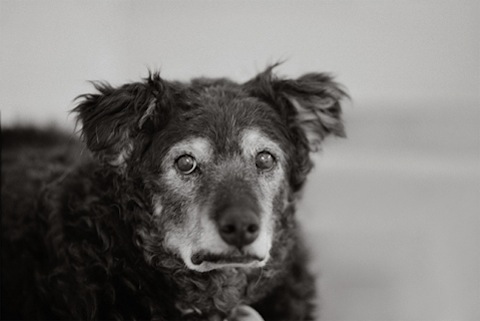
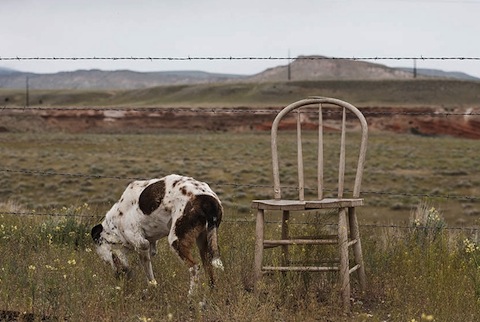
Although Nancy LeVine worked for years as a fashion photographer and NGO photographer, she recollects that she looked for personality rather than beauty in her models. Consequently she had trouble fitting in with the fashion world. She decided, therefore, to photograph her real muses, her dogs Lulu and Maxie. As they aged, she was struck by their quiet acceptance of their quickly shortening lives. She decided to travel across America to find other dogs like them-willing to live happily and to die as peacefully as possible. Her project however, soon grew into something much more complex as her love of personalities drew her to certain dogs and the colors and forms of the world around them.
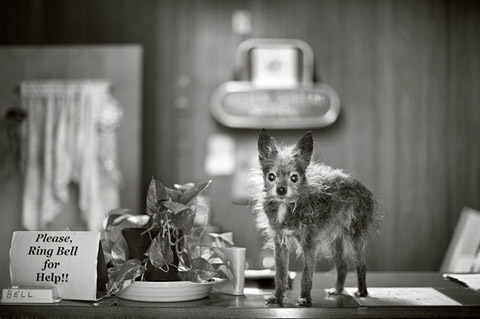
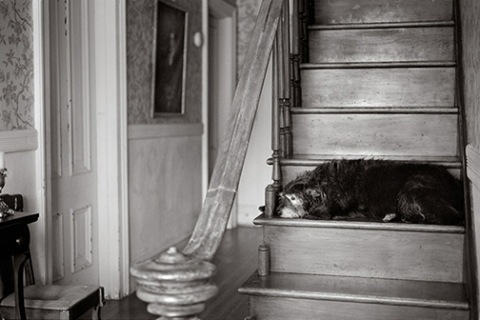
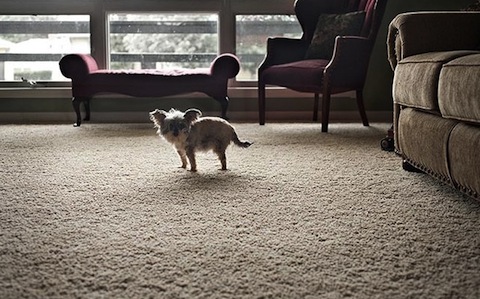
Her photographs are not only a vision of senior dogs, but of the American landscape, one that is being swallowed up by the incessant growth of the beast of urbanism. Her monumental prints show tractors and old homes rather than busy streets dotted with fast food franchises on every corner. The dogs she eventually chose for her exhibition all had an elegant air of satisfaction about them. From the most excited ranch dog to the calm homebody, all of the dogs had a similar expression of peacefulness which the viewers who were milling about the HCP exhibition space commented excitedly about. Her photographs demonstrate splendid technical knowledge, both in black and white and in color. At times they are hilarious as in the picture of a balding poodle and sometimes gloomy as in the picture of a very sad labrador lying on a peeling staircase. Her sprawling photographs encase her viewers in a quick tour of America and the loyal animals which help people endure the banality of their pedestrian existence and accompany them in celebration of good moments… Her use of elements of composition, most especially the repetition of forms and lines (which she says she always subconsciously looked for), aids her photographs and subjects move from one image to another. The curve of a dog reflected in a sofa’s arch is reflected in the hair surrounding a dog’s snout. Nancy Levine courteously answered a few questions for me.
Nonostante Nancy LeVine abbia lavorato per diversi anni come fotografa nel campo della moda e per varie ONG, ricorda di aver sempre cercato di ritrarre la personalità piuttosto che la bellezza delle sue modelle. Per questo motivo trovava difficoltà nell’adattarsi al mondo della moda. Decise quindi di ritrarre le sue vere muse, i suoi due cani Lulu e Maxie. Durante il loro invecchiamento era rimasta colpita dal loro silenzioso accettare lo scorrere del tempo. Volle quindi intraprendere un viaggio attraverso l’America per trovare altri cani che, come i suoi, vivessero tranquillamente e morissero in pace. Il suo progetto si trasformò ben presto in qualcosa di più complesso, essendo lei attratta non solo dalle personalità dei cani, ma anche dai colori e dalle forme che li circondavano. Le sue fotografie non sono solo il ritratto di cani anziani, ma sono anche lo specchio del paesaggio americano che viene velocemente ingoiato dalla crescita incessante della bestia dell’urbanizzazione. Le sue grandi stampe raffigurano trattori e vecchie case, invece di strade trafficate con fast food ad ogni angolo. I cani che da ultimo scelse per la sua mostra, avevano tutti un’aria contenta. Dal cane di fattoria più eccitato al più calmo di casa, tutti i cani avevano una comune espressione di pace.
Le sue opere dimostrano una splendida conoscenza tecnica, sia nella rappresentazione in bianco e nero, sia in quella a colori. A volte le foto sono buffe, come quella del barboncino spelacchiato; altre volte danno un senso di depressione, come quella del labrador triste sdraiato sui gradini di una scala in rovina. Le sue estese fotografie circondano i visitatori, portandoli in un veloce tour per l’America, e i suoi animali aiutano le persone a sopportare la banalità dell’esistenza, accompagnandole nella celebrazione dei loro momenti migliori… L’uso che la LeVine fa degli elementi compositivi, specialmente la ripetizione di linee e forme – che, afferma, lei cerca sempre inconsciamente-, aiuta i soggetti a muovere da una immagine all’altra. La curva della forma di un cane si riflette nell’arco dello schienale di un sofà che si riflette, a sua volta, nei peli che circondano il muso dello stesso cane. Gentilmente LeVine ha accettato di rispondere ad un paio delle mie domande.
What pushed you to photograph dogs across America?
I was inspired by watching my own dogs face their elder years. It was also a good way to see America.
Cosa ti ha spinto a fotografare cani in giro per l’America (Senior Dogs Across America)?
Sono stata ispirata dai miei cani che stavano affrontando la vecchiaia. Inoltre era un buon pretesto per visitare l’America.
What does your next project consist of?
Portraits of people in the arts in New York City.
In cosa consiste il tuo prossimo progetto?
Ho intenzione di ritrarre persone a lavoro a New York City.
How has working for NGO’s and hospitals affected your work?
Tremendously. I love working in the health care world. I am always looking for that authentic moment. Real moments to share.
Quanto ha influenzato sul tuo stile lavorare per le ONG e per gli ospedali?
Moltissimo. Amo lavorare nel mondo dell’assistenza sanitaria. Sono continuamente in ricerca di momenti autentici. Veri momenti da condividere con gli altri.
How did you meet the dogs you later photographed?
I met the dogs through the dog community – vets, pet sitters – and also recommendations of friends/family. People introduced me to other people who had senior dogs.
Come hai incontrato i cani che poi hai fotografato?
Ho incontrato i cani tramite la dog community – veterinari, petsitters – e anche attraverso i consigli di amici e familiari. Persone mi introducevano presso altre persone che avevano cani anziani.
How did your early childhood on the Virgin Islands affect your work?
My father was a very serious photographer although not his profession. Living on St. Thomas was so beautiful and untouched in my childhood and I had the freedom to take solitary walks as a young girl to explore my surroundings. Being comfortable in that peaceful silence is very important in the life of a photographer.
Quale influenza ha avuto su di te l’infanzia alle Isole Vergini?
Mio padre era appassionato di fotografia, nonostante essa non
rappresentasse la sua professione. San Thomas è molto bella, ed era ancora tranquilla quando ero piccola, perciò ero libera di passeggiare da sola e di esplorare ciò che mi circondava. Essere tranquilli in quel silenzio pacifico può essere molto importante nella vita di un fotografo.
Who are your major influences?
Well, of course, my father. And St. Thomas. Muses. Then, I would say some of the brilliant photographers I was introduced to through books and my career.
Chi sono le persone che hanno influenzato maggiormente la tua passione?
Beh, ovviamente mio padre. E San Thomas. Alcune muse. Poi, direi che ci sono dei fotografi brillanti ai quali mi sono avvicinata attraverso i libri e la mia carriera.
Although you take pictures in black and white as well, all of your photographs (including those in color) seem to focus on just a few significant color tones, is that a conscious decision or just something that happens? And if it is a decision, why do you make it?
Great observation! This is a way of seeing that comes naturally to me. I have always been inclined towards photos that are connected in their tonal range. Perhaps it is because I think it is a way to enter the photograph. With many colors, my eye bounces around.
Anche se fai foto in bianco e nero, tutti i tuoi scatti (inclusi quelli a colori), sembrano concentrarsi su poche tonalità significanti. È una tua decisione o si tratta di qualcosa che accade per caso? E se si tratta di una decisione, qual è il suo significato?
Bella osservazione! Si tratta del mio modo naturale di vedere le cose. Ho sempre avuto una certa inclinazione per foto connesse tra loro da una determinata tonalità di colori. In questo modo, forse, io penso di entrare nell’immagine. Con troppi colori i miei occhi rimbalzano qua e là.
You write that Lulu and Maxie were or are your muses. How have they influenced your work? Also, do you have a new muse now that you went across America photographing dogs?
Lulu had a huge influence in my work. I saw in her the way she imbued so many different moods depending on where she was. I use to call her my ‘Meryl Streep’. My favorite muse in fashion, Lisa, was able to do the same thing. I guess at heart I am a documentary photographer so when I am working I like everything to feel authentic. Maxie added a lovely self-serious quality to my photos even though people often saw ‘lightness’ with her. I do not have a particular muse now.
Tu hai affermato che Lulu e Maxie sono, o sono state, le tue muse. Come hanno influenzato il tuo lavoro? Hai una nuova musa ora che hai girato l’America fotografando cani?
Lulu ha avuto una grande influenza sul mio lavoro. Vedevo in lei il modo attraverso il quale potevo cambiare di atteggiamento in ogni posto nuovo. La chiamavo ‘Maryl Streep’. La mia musa preferita della moda, Lisa, era capace di fare la stessa cosa. Io credo di essere una documentary photographer, quindi, quando lavoro, voglio che tutto sia autentico. Maxie aggiungeva un bellissimo carattere quasi serio alle mie foto, e la gente spesso vede una ‘leggerezza’ in lei. Non ho una particolare musa adesso.
What are your recommendations for the newer generation of photographers?
Always the same thing. Find meaningful subject matter and spend years getting to know it. It is then that your photographs can grow with authenticity. ‘You do not know something until you know it.’ The pace of everything has quickened but there are no shortcuts to depth. It takes time to fully understand anything. Keep sketching with your camera!
Potresti dare qualche consiglio alla nuova generazione di fotografi?
Sempre la stessa cosa. Trova un soggetto che abbia un significato e passa degli anni a conoscerlo. È allora che un fotografo può crescere con autenticità. «Non conosci qualcosa finchè non la conosci». Il ritmo di tutto è accellerato, ma non ci sono scorciatoie alla profondità. Ci vuole del tempo per conoscere realmente bene qualcosa. Continua a scattare con la tua macchina fotografica!
What do you most like about being a photographer and what don’t you like at all?
I love having access to so many different worlds. If I am interested in something, there is usually a way through photography to learn about that world. I have had so many great experiences. The hardest part can be the solitary nature of this life when you are not on an assignment whether for yourself or for a client.
Cosa ti piace di più dell’essere fotografa? E cosa invece non ti piace affatto?
Amo avere accesso a tanti mondi diversi. Se sono interessata a qualcosa, generalmente esiste un modo per scoprire quel mondo attraverso la fotografia. Ho avuto così tante belle esperienze. La parte più difficile, è la natura solitaria di questo tipo di vita quando non lavori ad un progetto per te stesso o per un cliente.
Nancy Levine’s photos reflect her concise and courteous manners. She left us with a simple goodbye, but with a much greater knowledge of this art and a love for a women, otherwise inconspicuously normal inconspicuously normal like us, but capable of converting a normal dog into a memorable photograph.
Le foto di Nancy LeVine riflettono il suo modo, conciso e grazioso, di aver a che fare con la gente. Ci ha lasciato con un semplice addio, ma con una conoscenza maggiore dell’arte e un amore per questa donna normale come tutti noi, ma capace di convertire un semplice cane in una fotografia indimenticabile.