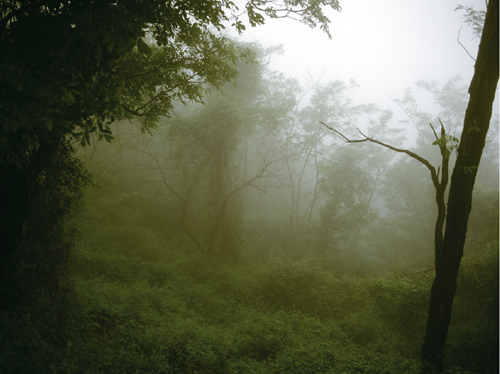
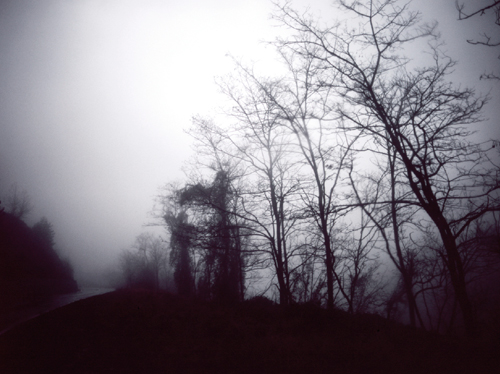
SP67 is definitely one of our favorite work. Off course we’re italian and very proud of our countryman, we believe Roberto has done a terrific photogrpahic work. He got deep in his surrounding, lived the places, the moods, the atmosphere and after several years brought back these wonderful pictures of SP67 road.
We asked him a few questions and he was so kind to answer.
What’s photography for you? What’s the meaning of it?
It is a way to tell stories, bring up for discussion. By “telling stories” I mean that genre some defined as diaristic or confessional, Nan Goldin, Larry Sultan with ‘Picture from home’, Stephen Shore, Richard Billinghan. I would also add those products with a mental narration, by synaptic connections, images found in memory book, like those by Dirk Braekman e J.H. Engstrom or a way to think about the past, the nature of humankind like many of the works by Christian Boltanski. By “bring up for discussion” I mean more conceptual approaches, pictures talking about photography, about the method of vision, to answer, to render and deconstruct visual spurs. For examples authors like Hans Peter Feldman, Roni Horn’s ‘Still Water’, Tacita Dean’s ‘Floh’ which behind their pictures’ neutrality tell us about worlds. H. P. Feldman: the flying airplanes, the bare knees that unintentionally awaken similar images in our memory. Who’s never lifted up his eyes to see a flying airplane or felt a subtle emotion looking at what a skirt uncovers. The image as least common denominator. But this is just the way I feel photography, not the way it is.
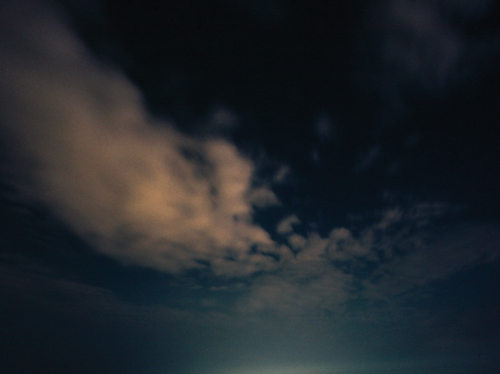
Many of your pictures from SP67 were shot at night. Why this choice? What’s the night for you?
The night , the fog, the rain, the darkness, they keep us from having a clear vision of reality, they’re a limit to our senses but they also push us to go further, to think or simply imagine. A photograph, unlike moving images, gives you plenty of time to steep in the subject, get in the details, build up stories from your imagination. Perhaps it’s also a way to de-contextualize the subject, place it on a dark stage, to use this magic.
You’re one of the few italian photographers making a so called “contemporary photography”, your pictures silently tell about a region, places and atmospheres you care, in an emotional and contemplative process. Do you follow italian photography? What do you think about it?
I don’t have much interest in italian photography, I have no reasons to like it more than the one from the rest of the world. Maybe there’s never been a school, a movement, a memorable period to be object of research or examination. That doesn’t mean there are no typical italian issues. I think one of the most interesting work, in the last years and not only for italian photography, is Valerio Spada’s “Gomorrah Girl”. There’s everything in it, the idea at the base of making a book, social contents, a rigorous research, the poetry between the lines of an image almost impersonal, the snapshots’ sharing and its cataloguing, coherence with the book as an object and off course beautiful images.
What’s the deal about making a photo book nowadays? How was SP67 book born?
There are several reasons to make a photo book, it is for sure, more than a photo collection. SP67 had a pretty long way, also because when it started I was no longer living in Genoa – my bad- and as you can see, the work was all about weather conditions. Genoans don’t call it SP67, but its commongly addressed as “Mt. Fasce’s road”. People living in districts like Marassi, San Fruttuoso, Borgoratti o Strurla, hanged in there for sure in some periods of their life, others still do. You can probably find similar roads in other cities’ suburbs, and that’s what i liked about it. Propose a sort of microcosm that people can relate to, perhaps in their memories or imagination.
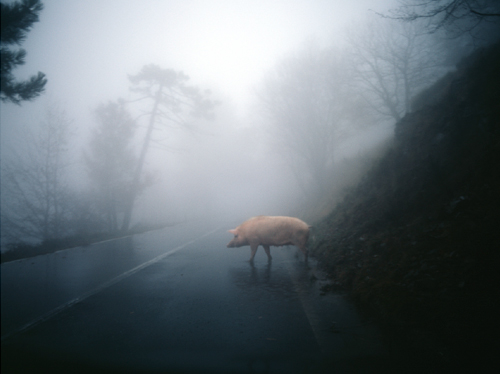
How’s it to face a wild pig on the road in the middle of the night by the way? :)
Many times I drove back and forth on Mt. Face’s road looking for similar encounters. Anyway, first you gotta stop, then watch your back for incoming trucks and finally you have to be fast enough to focus and shoot. If you got something, then you’re lucky.
All images © Roberto Schena