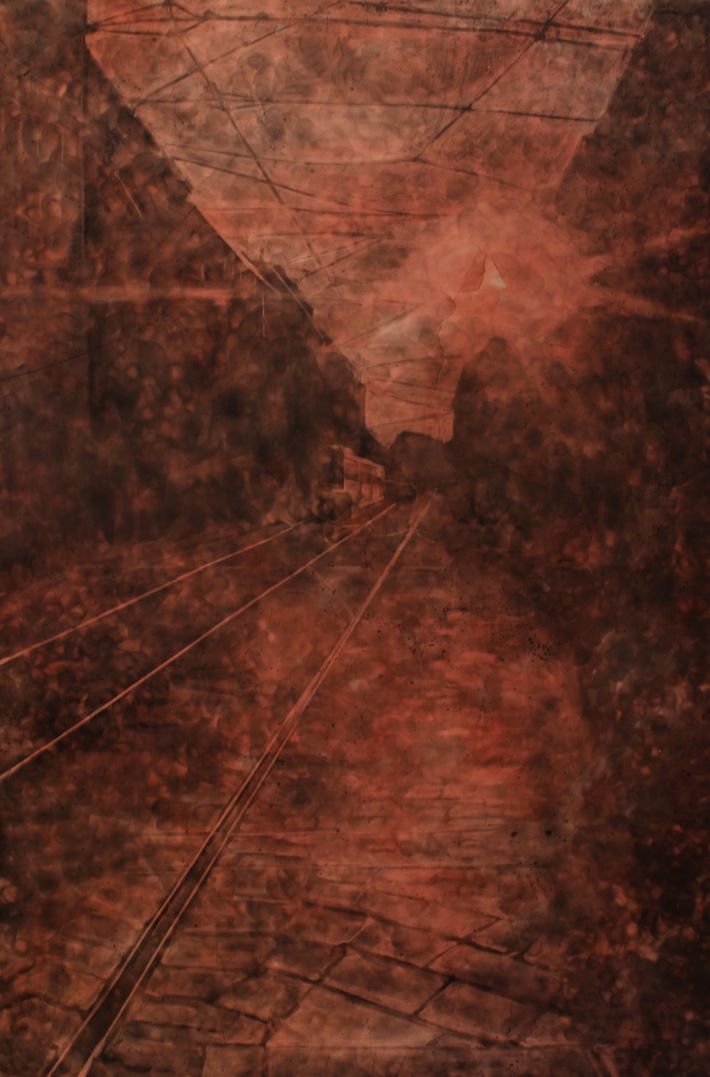
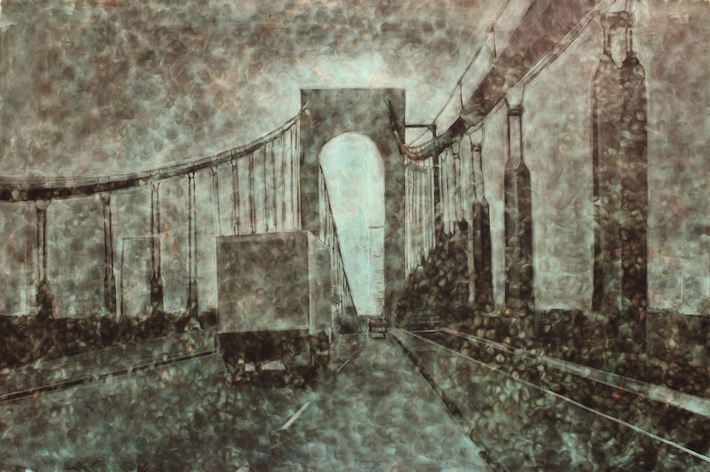
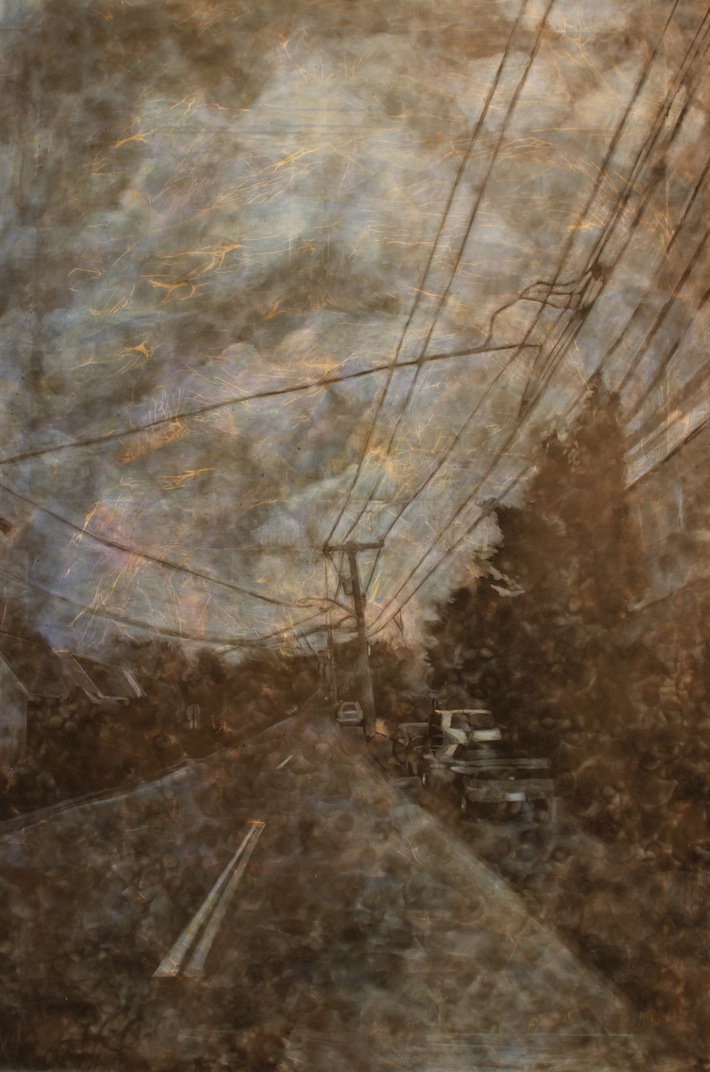
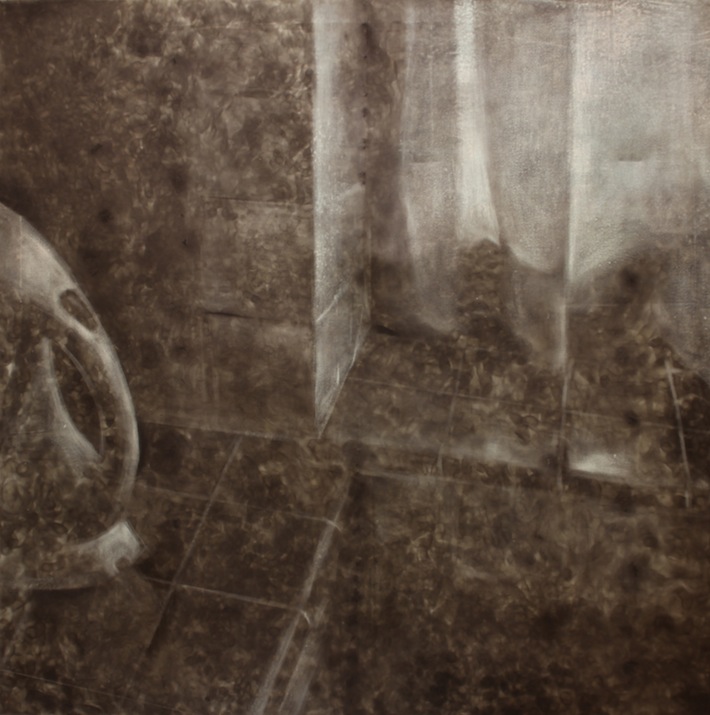
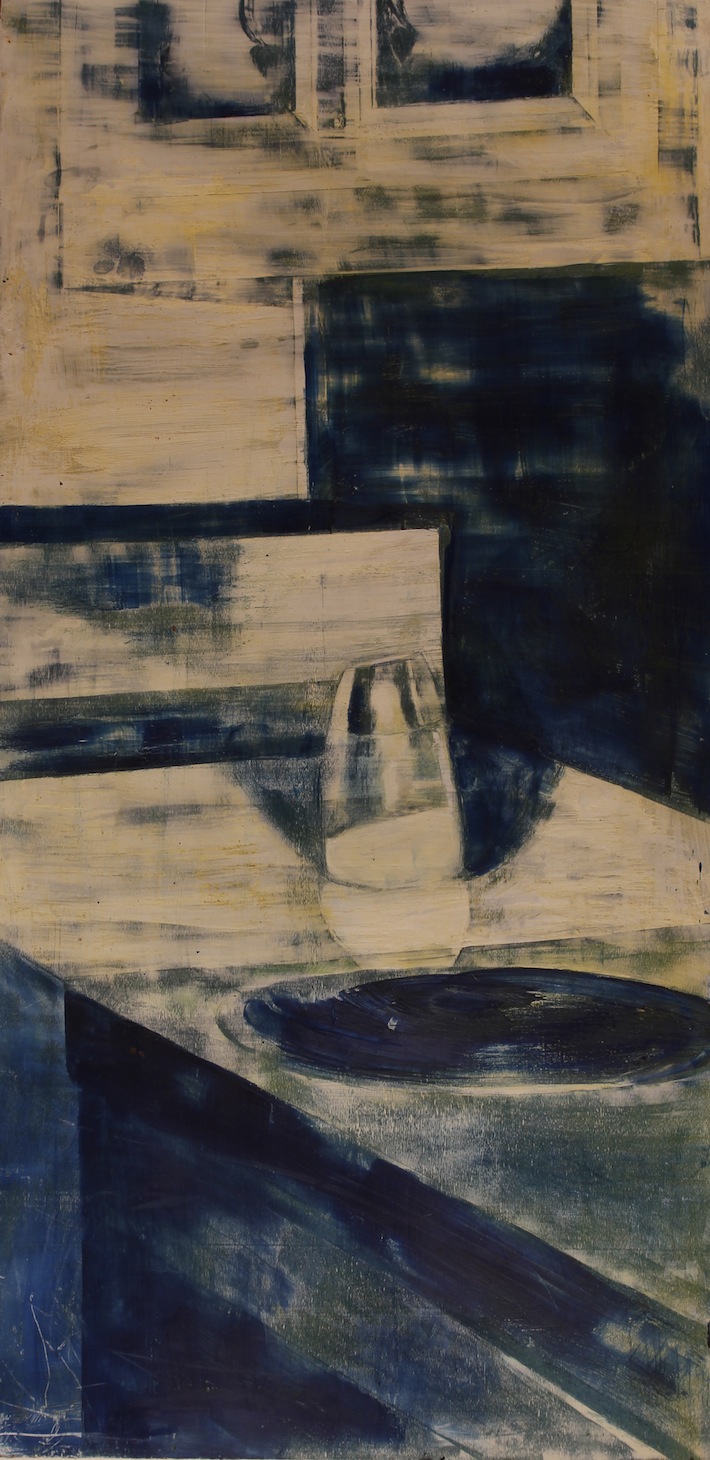
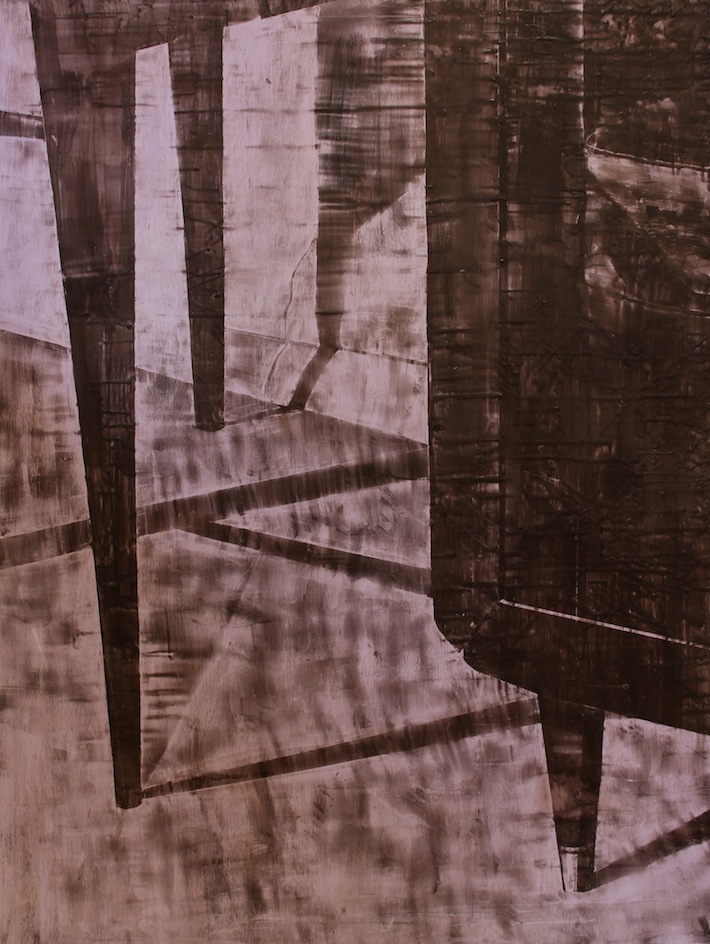
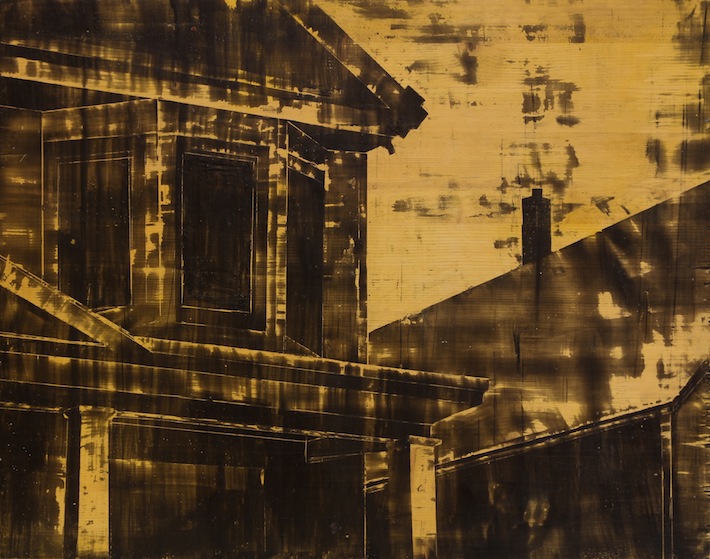
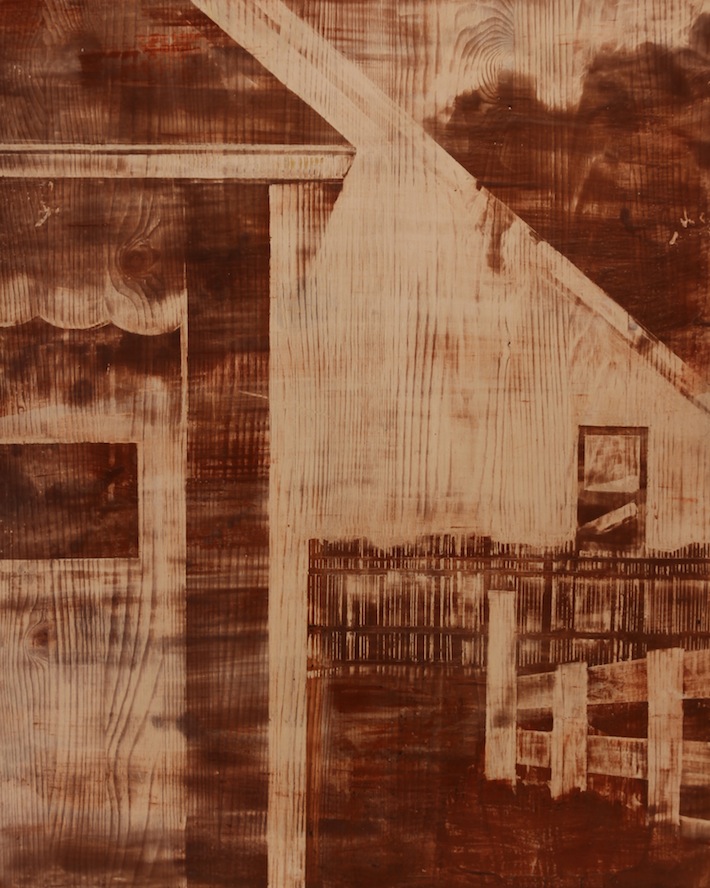
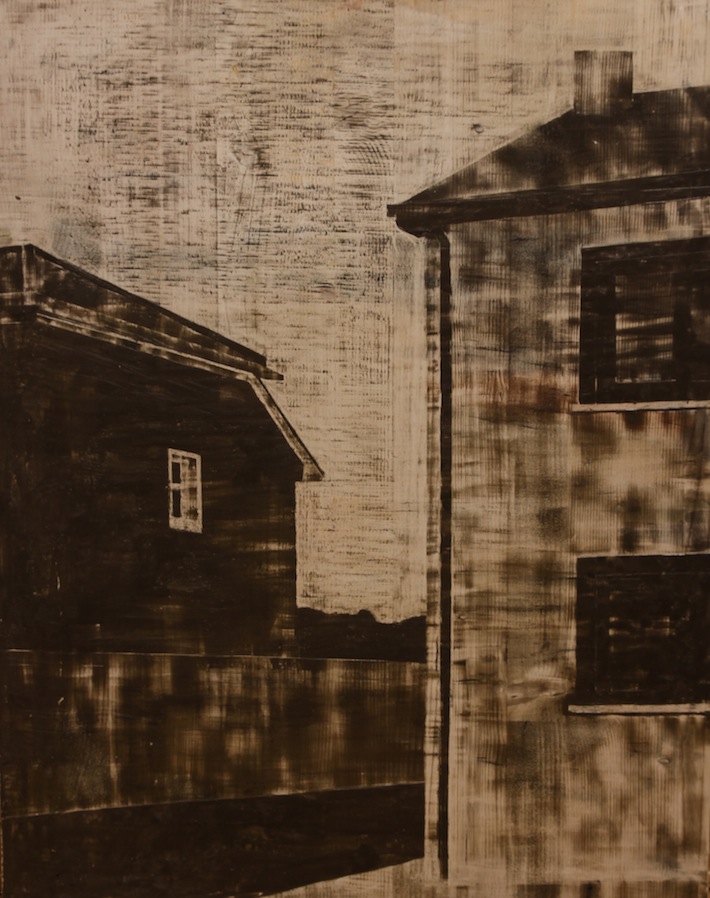
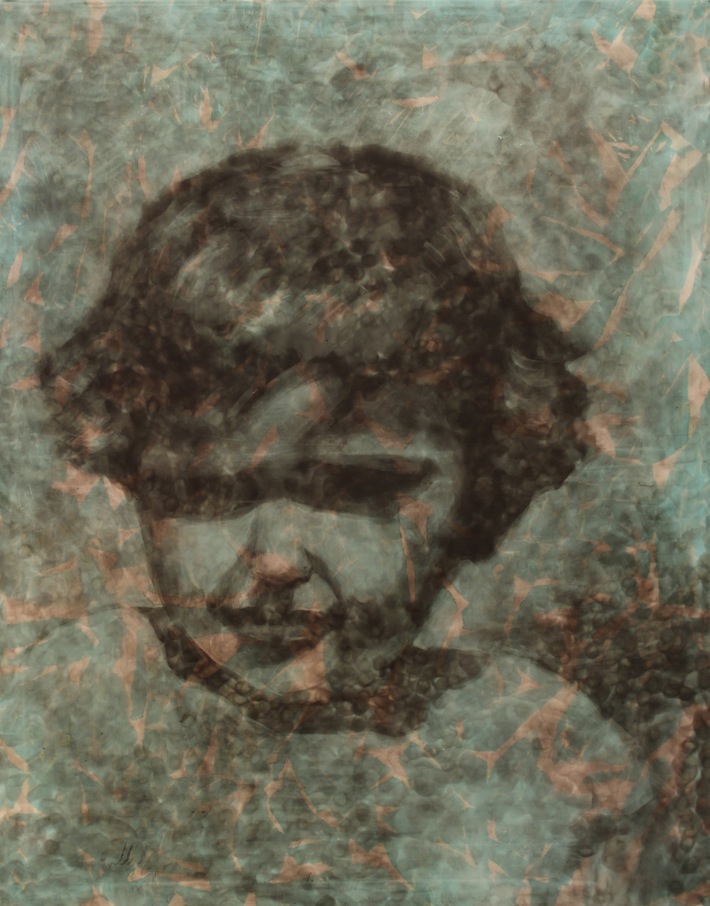
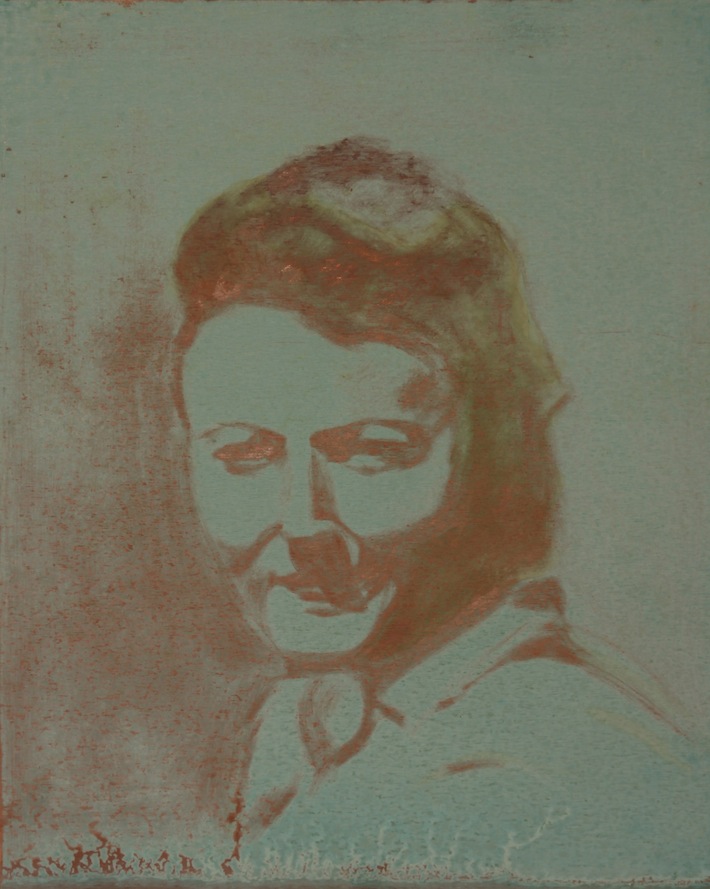
The technique and the materials chosen by Jenna Pallio are the philosophical key in the artistic representation of this diffuse dilemma of emigrants. The artist uses the process of removal with malleable materials, such as wax and wood; she removes to create, eliminates to realise new shapes. The utilization of the materials of wax and smoke, burning and removal, demonstrate the process of a search for space and material. On the wooden surface the artist applies paraffin wax mixed with pigments. The image is then scraped off with a razor blade and other pointed tools. Another mode of creation consists of applying smoke onto canvas, then pulling the image through the purification of the surface. It is the destiny of sculptural digging – the creation of a new shape. Experimenting with and on the surface, Jenna Pallio also uses metaphorical materials such as the smoked mirror, or the oxidized copper plate, on the area which she applies the smoke from the candle which is then removed in some zones with cotton pieces in order to create a portrait.
Roads, “almost invisible for the habit”, as it was defined by J.L. Borges, becomes in the pictures of Jenna Pallio a discovery, a new point of view, not familiar anymore and therefore disappeared in the mind, but they are the roads of new poetic shadings. The roads – doors, portals – become sacred as in the imperial cultures, from the Mesopotamia’s to the Egypt to the Roman Empire… They make entering into a path, creating a run between the past and the future, a way to be reveal like putting you between the known one and the stranger, entrance and exit and vice versa, of a border to be exceeded. Wandering between the familiar roads leads to an inner path, to the evaluation of one’s own roots, of the place that you consider your house and home, to the hope of picking and including your own nature.
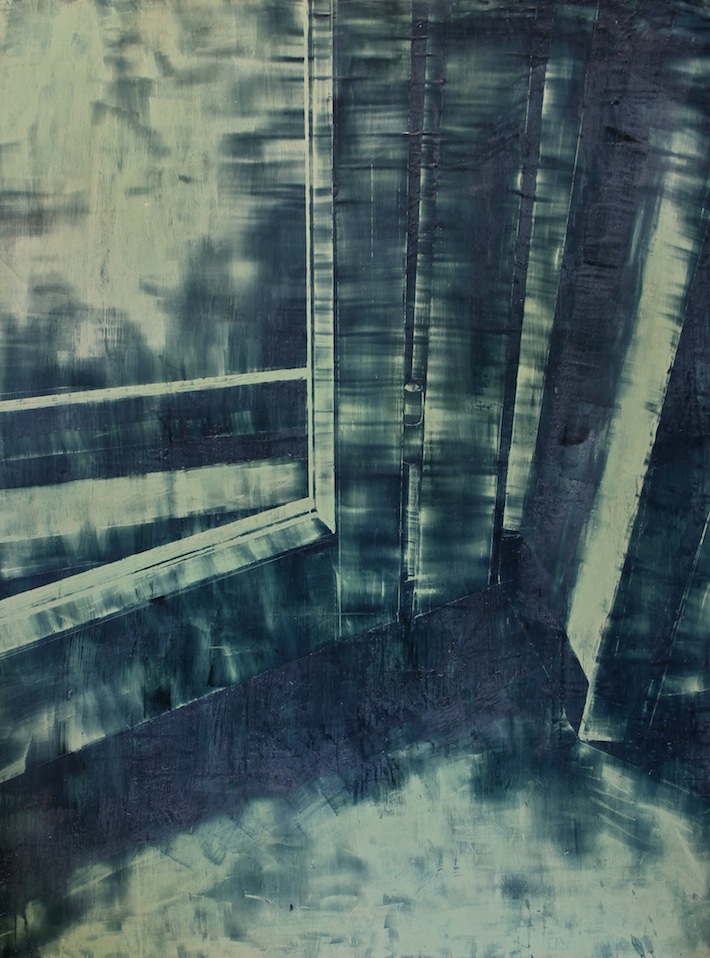
Corners, are like borders between the outward one and inner world, when you cant’t understand where you are, in the outside or in the inside, and which is the place that can give the feeling of home.
To be in the corner, to hide ourselves,to place fragmentary sight of an interior as the subject and object of the picture to look somehow for the intimacy with this place, house, but also a way of remembering that place that lacks, recreating it in the memory through this fragmentation… to Understand, where it is I, what I am now: which is the house and where is it what “mine” can be defined – in self-reflection. Here we have to with the fragmentary image that wants to recreate the whole vision: it is the artistic interpretation of the function of the memory.
So it works also in the series of Portraits … The faces are created to find ourselves, in being reflected in others. It is a work that tends to restore different faces, digging them from the memory, to be able to reply to the question: who am I? The autoreflection, note.
The perception of the time in the work of Jenna Pallio is recognised in a prism from materials and shown spaces and in continuous superimposition. The symbolic use from the materials in continuous transformation – smoke, wax, – talks about an unceasing memory metamorphosis, its contradictory nature, which is shown by the removal technique.
Jenna Pallio: Statement
Perceptions of time and memory are the major threads that weave through my work. Over the past several years I have investigated this by employing photo based imagery, most recently presenting situations through fragmented scenarios. My process is significant to the conceptual framework of the work. Paintings and drawings are created through removal of material. An area is coated with a certain material such as paint, wax or smoke and then I create the image by erasing from the surface. In this way, I am pulling away in order to create; going backwards in order to capture something concrete and familiar. The process reflects how memory functions in our lives. While certain memories disintegrate, it is the fragments that remain.
My current interest explores a more symbolic use of materials in my image making process. In some works I scrape imagery into the surface of layered wax. An element of sculpture is thus present through the carving away of materials as well as my use of space in installation works. In other works, an image is revealed by sandpapering the carbon off of a smoke treated canvas, wood, or mirror. This use of materials contributes a more ephemeral and esoteric quality to the work and provides a basis for a deeper exploration into the concept of memory through the physical process.
In my latest series of wax works, entitled “Corners”, I am investigating, snippets, moments of time and space in our memory and reality. Our selective memory chooses what we deem important in our worlds on a personal level. In these works I explore those moments we select, the others we let slip by. Through the esoteric quality of the wax, I am physically scraping away layers to reveal what lies beneath, as we scrape away at our own realities, choosing what to remember.
Materials and technique are in constant communication with one another as the works evoke the layered emotions and sensations of memory.
Jenna Pallio, b. 1976 New York has received her Bachelor’s and Master’s Degree from New York University. She has had several solo and numerous group exhibitions in the United States and Europe. She lives and works in Milano, Italy.
Fermata
Drive
Road
Run
Walk
Contemplating
Going
Kitchen
Lamp
Salt
Shadows
Sofa 1
Sofa 2
Untitled 1
Untitled 2
Untitled 2
Vacation
Waiting
Where is my love going?
Aunt
Brother
Expectations
Friend
Holiday
Love
Mother
Unknown