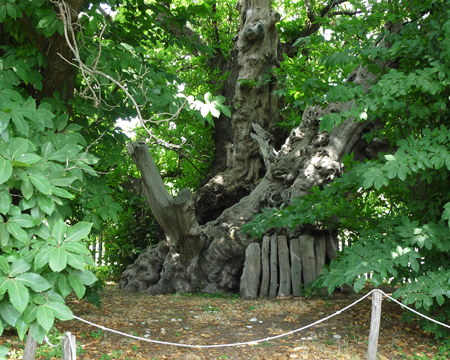
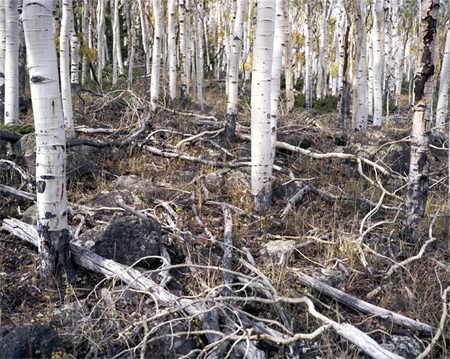
Rachel Sussman is a time traveler.
For the last few years, the American photographer has journeyed across the globe on a mission to bring back images of the world’s oldest living organisms. In her ongoing project, Sussman has traveled to the primal landscapes of southern Greenland, the timeless high-altitude Andean deserts of South America and even under the ocean.
«The project is a celebration and record of our past, a call to action now, and also a barometer of our future».
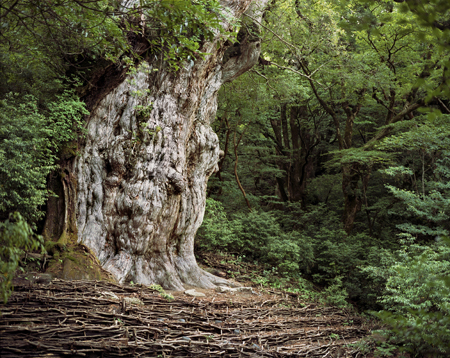
Sussman began her time-traveling trips in 2004 while visiting the island of Yakushima in Japan to see a reportedly 2,200-year-old tree. On her return to the U.S., the idea to photograph an example of other long-living ancient species germinated and grew.
«It’s been a fantastic learning experience and so unexpected, these organisms have never been cataloged in this way; there isn’t a global species longevity catalog.» Sussman’s ancient organisms are continuously living and are genetically identical individuals.
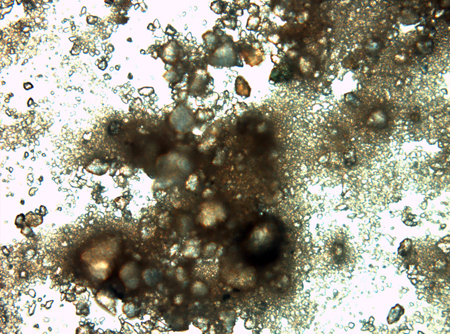
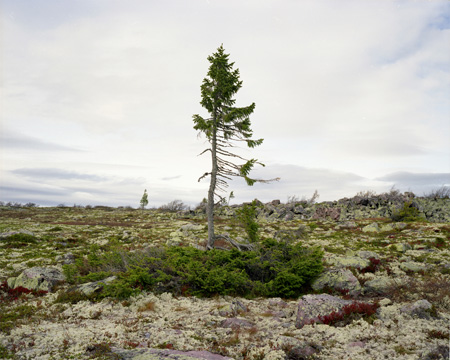
So far, she has shot more than 25 different species of plant or organism, each being older than 2,000 years — «I wanted to start with the idea of “year zero”» — with the oldest being actinobacteria from the permafrost of Siberia estimated to be around 500,000 years old.
After initial research on the Internet to track her subjects down, Sussman contacted scientists who were studying the species she wanted to photograph.
«Nine times out of 10, they’re thrilled that someone outside of their field is interested in this esoteric work that they’re doing, then once the word got out there, people started contacting me.»
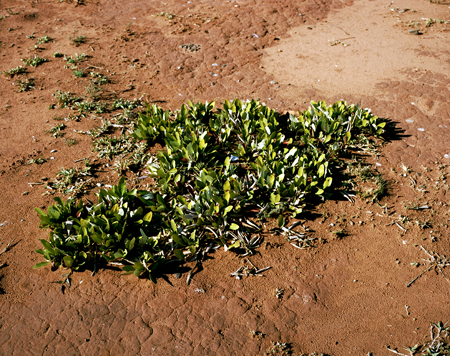
Sussman discovered the llaretta in the Atacama Desert — a relative of parsley that resembles a large green rock— from a comment left on her blog after announcing she was going to Chile. Plants like llaretta or the welwitschia in Namibia live in extreme conditions, a common theme Sussman discovered while tracking her subjects down.
«They live where many other species couldn’t even survive, let alone thrive.»
As well as the metaphysical contemplations evoked by her pictures, there is an environmental message from her work. Many of the organisms she has photographed are not in protected areas or are in places experiencing a potentially damaging change in climate.
«It really varies, from really well protected to being not protected at all and having some sense of peril in fact. In some cases like the Siberian bacteria… it lives in the permafrost. But if the permafrost isn’t permanent, it’s a climate change issue and it will die.
«The welwitschia is in national
parkland, but that being said, there are mining companies that actually operate in the park. In the U.S., the clonal Mojave yucca and creosote are on land designated for all-terrain vehicle use. There are fences around them, but you have people out four-wheeling around from LA for the weekend.»
With 10 more organisms on her list to capture with her lens, Sussman would like international recognition for each of the species she shoots.
«Ideally, I would love it if each of the oldest living things could be afforded UNESCO designation. That’s actually become a secondary goal that’s come out of the project. They really do deserve our attention and protection.».
All images © Rachel Sussman text by Dean Irvine, CNN
Every week the guys at Dead Porcupine Mag choose a photographic work among their publications to be featured on Dude Magazine.
Dead Porcupine Mag, founded and curated by Raffaele Capasso and Francesco Claudio Cipolletta is a free online blog/magazine which aims to showcase talented photographers from around the world together with reporting hot topics and articles about contemporary photography. We strongly believe photography is about sharing ideas, emotions and experiences: that’s why we encourage fellow photographers and artists to contribute with their works.


![]()