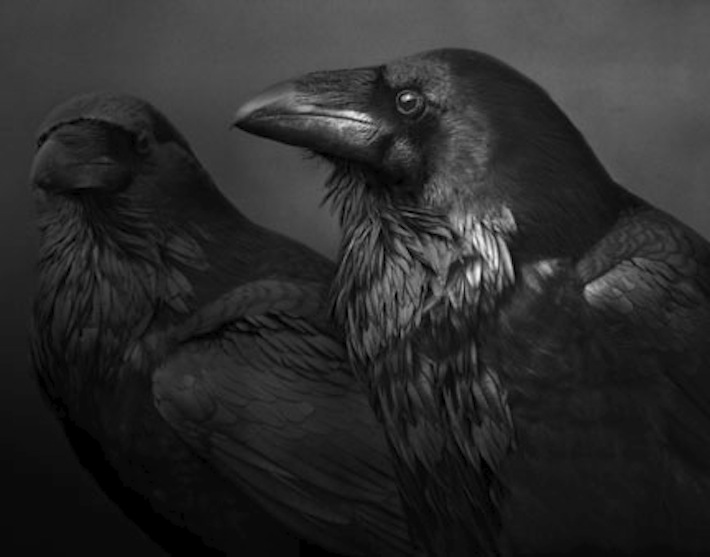
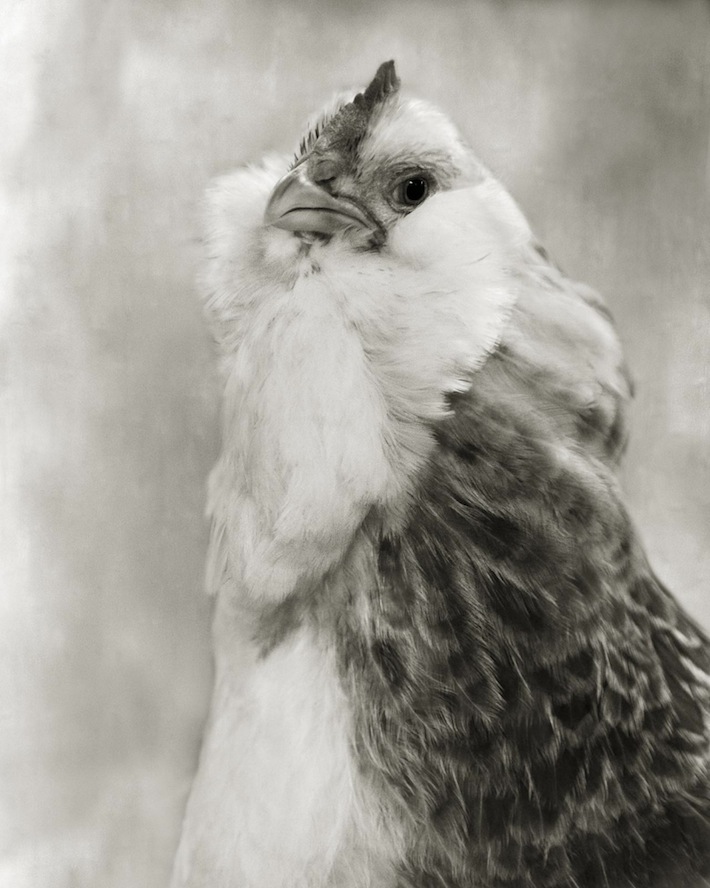
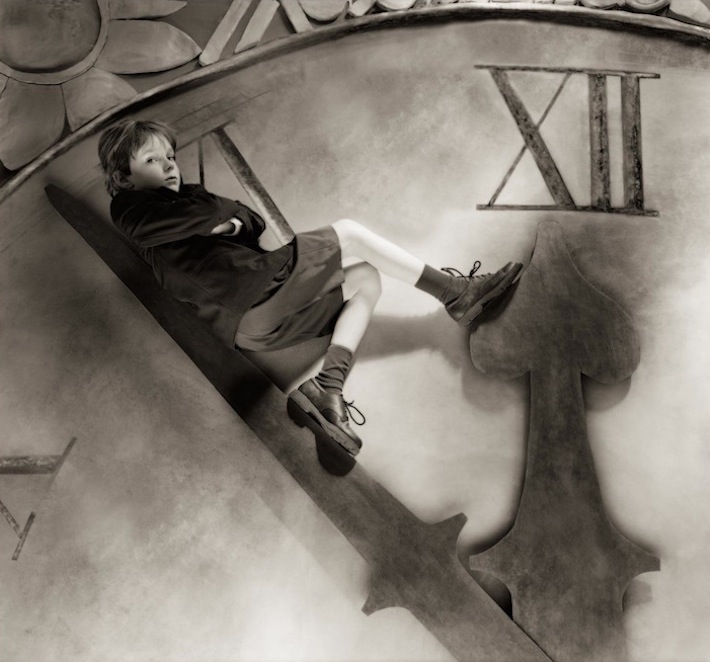
Un paio di mesi fa ho visto la mostra di una fotografa surrealista allo Houston Center for Photography. Generalmente non rimango impressionata da quello stile di fotografia dato che spesso le foto sono troppo editate per i miei gusti. Eppure il lavoro di Beth Moon mi ha piacevolmente sorpresa. Le sue foto raffigurano spesso un mondo che ci sparisce attorno. Mostra alberi che stanno velocemente estinguendosi e masse di polli in fotografie che sorprendono i visitatori con le loro allusioni alla pop art. Beth Moon è sempre stata nota per le sue immagini surrealiste. Le foto acquistano quei caratteristici sfondi grigiastri e nebulosi grazie a un processo di stampa estremamente complesso. Tuttavia, prima della serie Seen But Not Heard, si limitava a fare fotografia naturalistica. Seen But Not Heard mostra la sua crescita nella ricerca di un tema universale e un aumento dell’attenzione per la tecnica. Basata su una poesia di Dylan Thomas, la serie raffigura bambini in un mondo di adulti. Essa mostra la vita dei bambini, vestiti da uomini e donne d’affari, nel corso del tempo. Le nuvole tempestose e le ombre spaventose trasmettono un sentimento di disapprovazione per la società che spinge i bambini a crescere prematuramente invece di incoraggiarli a soffermarsi sulla loro infanzia. Ancor più mi ha impressionata l’esplorazione del rapporto tra uomini e animali nella serie Thy Kingdom Come (Venga il Tuo Regno). Mi ricorda la controversa trilogia His Dark Materials di Philip Pullman, che tratta, tra le altre cose, del rapporto tra uomini e animali. Sia Pullman che Moon mostrano che nel corso della storia e attraverso varie culture, gli animali hanno portato gli uomini alla salvezza e ad un mondo più ricco. La nebbia mattutina ricercata per queste serie dà alle fotografie una fluidità spirituale che le invade tutte. La serie di Beth Moon più famosa è probabilmente Island of the Dragon’s Blood (Isola del Sangue del Drago). Ha viaggiato verso l’Isola di Socotra, nello Yemen, per fotografare gli alberi che sorgono in quelle terre mistiche. Essendo rimasta separata dalla civilizzazione umana per secoli, l’isola pare incontaminata (anche se questa potrebbe essere solo un’impressione data dalle fotografie di Moon). La stranezza delle forme e gli sfondi tipicamente ombrosi aiutano lo spettatore a perdersi nelle ritmo ripetitivo dei rami. Recentemente ha portato a compimento Odin’s Cove (La Baia di Odino) che si concentra sui rapporti tra uccelli. Separandosi dai suoi temi precedenti, questa serie ruota attorno all’idea del rispetto nei confronti di questi animali e, nelle foto, gli uccelli condividono momenti teneri e ammirano la costa Californiana. Dato che sta già lavorando a un nuovo progetto, Beth Moon ha avuto poco tempo per l’intervista, ma ha comunque risposto a quasi tutte le mie domande. I visited an exhibition at the Houston Center for Photography a few months ago featuring surrealist photography. I must admit that I have not usually been impressed by surrealist photography as they often are overly edited for my liking. I was pleasantly surprised by Beth Moon’s photography. Her pictures are often of the world that is quickly being swallowed up around us. She shows trees that are quickly becoming extinct and of multitudes of chickens in photographs that surprise viewers with their pop art allusions. Beth Moon has always been known for her surrealist images. Her pictures acquire their signature misty grayish background through an extremely complex printing process which lends an aura of mystery to her photographs. However, until her series Seen But Not Heard, she limited her photography to naturalistic and natural photography. Seen But Not Heard shows growth in the pursuit of a universal theme and increased attention to technique. Based on a poem by Dylan Thomas, the series shows children in a completely adult world. They mark their lives by the passing of time and dress up as businessmen and women. The stormy clouds and fierce shadows which prevail throughout the series convey a sense of disapproval towards the society that pushes children to grow up, instead of encouraging them to linger on their childhood. However, I was most impressed by Thy Kingdom Come’s exploration of the relationship between humans and animals. It reminded me of Phillip Pullman’s His Dark Materials, a controversial book series which, among other things, focuses on the interconnectedness between animals and humans. Both Pullman and Moon show that throughout history and spanning diverse cultures, animals have led humans to safety and toward a more prosperous world. In our interview she mentioned that she has always been interested in birds, whom she feels have been relegated from prominence inthe public’s eye. Although other animals are included, the majesty of the birds hanging on the backs of the young children are most striking. The morning fog she looked for when shootinglends the photographs a spiritual fluidity that moves from picture to picture. Beth Moon’s most famous series is probably Island of the Dragon’s Blood. She traveled to the Island of Socotra, a Yemeni territory, specifically to photograph the trees which loom over the terrain in that mystical land. As an island that was cut off from human civilization for centuries due to hazardous travel, the island seems untouched by humanity (although that may just be the impression left by Moon’s pictures). Although all of the photographs are of actual trees, the quirkiness of their shapes and the pervading shadowy backgrounds help the viewer lose themselves in the repetitive rhythm of the branches. She recently finished a series, Odin’s Cove, which focuses on birds and their relationships. Separating herself from her previous themes, this series shows birds as animals worthy of our respect. The birds shown are sharing tender moments and admiring the California coastline. As she was on a new assignment (just shortly after having finished Odin’s Cove), Beth Moon had little time for an interview, but she was able to answer a few of my questions. Come stampi le tue fotografie? Stampare sul platino è un processo di stampa per contatto. Questo significa che il negativo ha la stessa misura dell’immagine. Fotocopio le immagini della pellicola, applico una curva e stampo il negativo su una superficie di plastica. Poi mischio una tintura sensibile alla luce composta di metalli di platino e palladio. Applico questo liquido a un foglio da acquerello umidificato e lo spargo uniformemente con un rullo di vetro. Poi lo ripongo in una scatola stretta e luminosa. Quando è asciutto, lo avvicino ad una fonte UV sopra ad un telaio vuoto che tiene il foglio premuto contro il negativo e lo espongo alla luce. Poi si versa un rivelatore caldo sopra non appena l’immagine appare. Quindi la passo sotto a varie soluzioni neutralizzanti che la sciacquano e infine l’asciugo su vetro. How exactly do you print your photographs? Platinum printing is a contact printing process. This means the negative is the same size as the image. I scan the film, apply a curve to it and print out a negative on a plastic substrate. I then mix a light sensitive tincture made up of platinum and palladium metals. I apply this liquid to a humidified watercolor paper and evenly coat it with a glass rod. It is then placed in a light tight box. When dried it is placed under a UV source with the negative on top in a vacuum frame that keeps the paper tightly pressed against the negative and expose it with light. A hot developer is then poured over the top as the image appears. It is then put through a series of neutralizing rinse solutions with a final archival wash and dried on glass. In cosa consiste il tuo prossimo progetto? Non ti posso parlare del mio prossimo progetto dato che ho appena finito un nuovo corpo di lavoro che è stato in mostra a San Francisco alla Cordon Potts Gallery intitolato Odin’s Cove. Odin’s Cove riguarda l’idea di luogo. È una celebrazione della bellezza della natura in un paesaggio dalla vista stimolante dove il rovo e l’edera suggeriscono origini antiche. Dove si può incontrare una vista rigenerante della terra, le colline lussureggianti che pendono verso il mare, dove si può ascoltare musica nel battito dell’ala di un corvo. Questo progetto si è evoluto da una serie di viaggi in una parte molto speciale della costa Californiana. Lì ho sviluppato quella che posso definire “amicizia” con un paio di corvi. In un periodo di tre anni ho fatto molti viaggi in quest’area unica e mentre il mio rapporto con i corvi si sviluppava, questi mi hanno insegnato molte cose riguardo la loro vita e le loro personalità. Metà pirata, metà profeta, costruttori di magia e birichinate, i loro richiami gutturali si possono sentir riecheggiare tra le colline. Questa serie raffigura la loro fiducia in me, la lealtà che dimostrano tra di loro, il territorio su cui regnano, e la loro vita selvaggia. What does your next project consist of? I can’t tell you of my next project as I just finished a new body of work which has just been shown in San Francisco at Corden Potts Gallery titled, Odin’s Cove. This is the artist statement: «Odin’s Cove is about a sense of place. It is a celebration of the beauty of nature in a visually stimulating landscape where untamed bramble and ivy suggest ancient origins. Where a regenerative view of the earth can be found, in the lush cliffs that gently slope to the sea, where music can be heard in the beating of a raven’s wing. This project evolved from a series of trips to a very special part of the California coastline where I developed what I can only call a friendship with a pair of ravens. Over a three year period I made many trips to this unique area and as my relationship with the ravens grew – they taught me many things about their lives and personalities. Part pirate, part prophet, makers of magic and mischief, their throaty calls can be heard echoing through these hills. This series portrays their trust in me, their loyalty to each other, the territory they rule, and their life in the wild.» Una delle tue fotografie più famose è Heart of the Dragon (Cuore del Drago). Perché hai scelto quel tipo di albero in particolare come soggetto? La mie serie, Portraits of a Time (Ritratti di un Tempo) è uscita in una rivista di fotografia, LensWork. Qualcuno ha visto l’articolo e mi ha mandato una foto di un Dragon’s Blood (Sangue di Drago). Ero assolutamente impressionata e intrigata e mi sono promessa che avrei trovato il modo di fare il viaggio. Tre anni dopo, nel 2010, sono riuscita a visitare l’isola dove questi alberi crescono. One of your most famous photographs is Heart of the Dragon. Why did you choose that particular type of tree as your subject? My series of trees, Portraits of Time came out in a photography magazine, LensWork. Someone saw the article and sent me a picture of a Dragon’s Blood tree. I was absolutely amazed and intrigued and vowed I would try to make the trip. Three years later in 2010 I was able to visit the island where they grow. Cosa ti ha avvicinato alle galline per la tua serie Augurs and Soothsayers (Predizioni e Indovini)? Io sono sempre più insoddisfatta dell’industria del cibo, e ho scelto quindi la gallina come rappresentante degli animali usati come fonte di cibo. La mia speranza era di vedere questo animale sotto una luce diversa. Mia figlia mi ha aiutato con questo progetto. Abbiamo preso un piccolo tavolo su cui lei metteva la gallina. Io avevo pochi secondi prima che la gallina saltasse giù. C’è voluta un sacco di pazienza anche se alla fine ne è valsa la pena. Prima di questo progetto, non avevo la minima idea che ci fossero così tante bellissime differenti galline, tutte con personalità distinte! What attracted you to chickens for your series Augurs and Soothsayers (a series that focuses on chickens)? I have been increasingly unhappy with the food industry so I chose the chicken as a representative of an animal used as a food source. My hope was to see this animal in a different light. My daughter helped me with this project. We brought a low table in which she would place the chicken. I had a few seconds before the chicken would hop down. It took a lot of patience, but was richly rewarding. Before this project I had no idea there were so many beautiful breeds of chickens, with very distinct personalities! Nella serie Seen But Not Heard stavi raccontando una storia? Se sì, quale? Queste immagini costituivano per me un forte distacco in quanto i soggetti erano in posa, gli oggetti erano stati costruiti, e i luoghi erano stati usati per creare una storia. Stavo osservando come la società considera i bambini. Nel frattempo mi trasferivo dall’Inghilterra all’America ed era molto interessante per me vedere le differenze fondamentali riguardo questo tema tra i due paesi. Preferisco non dire più di così perché mi piacerebbe lasciare la storia libera ad interpretazioni individuali. In the series Seen But Not Heard were you telling a story and if so, what was it? These images were a departure for me in so much as they were staged, props were produced and locations were used in an attempt to form a narrative. I was looking at how society views children. I was just moving from England to America while I started this series and it was very interesting for me to see basic differences in this regards between the 2 countries. More than that I prefer not to speak as I would like to keep the story open so the viewer can read into it their own story.