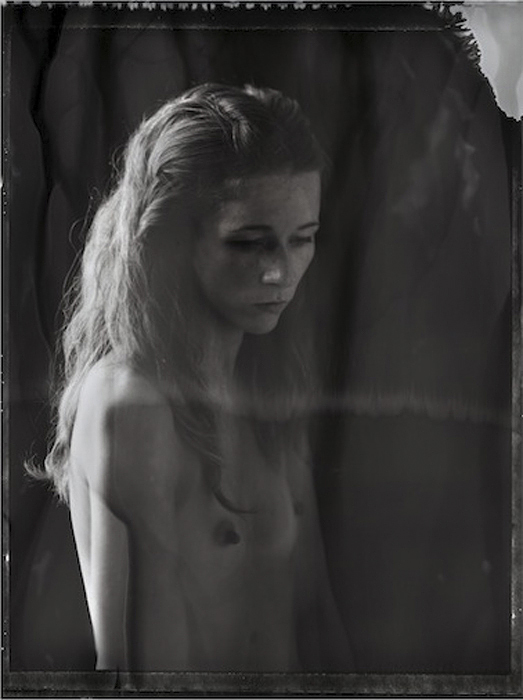
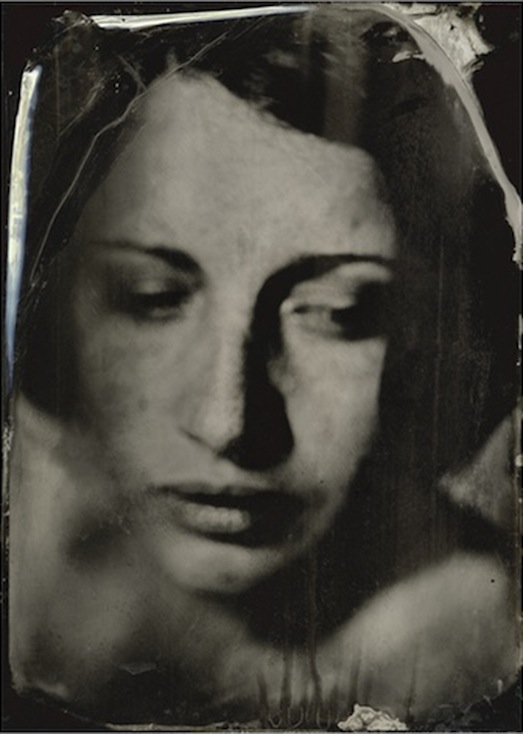
Galina Kurlat, a Houston based photographer, is most famous not for her subjects, but for the photographic techniques she uses to portray mundane ideas. Her very first, fresh out of college, series, for example, simply shows the effect of weight loss on the human body. Such a topic has been revisited by photographers worldwide and is an easy subject to shoot. However, Galina’s photographs distinguish themselves by their incredible texture and feeling. The old fashioned developing techniques coupled, on occasion, with more modern cameras and equipment reveal a dazzling array of tones, impossible to capture with more standard printing techniques. All of her series, including her most recent one, which feature portraits of herself, have several, almost identical photographs. Each picture though, is slightly unique in that the prints decay differently and the tones are extremely variable. Each individual print can show a different angle of herself as in her Inherent Traits self portrait series, evokes a different feeling of self destructiveness as her collodion print slowly decomposes. Her prints, inspire a feeling of decay and of age which coupled with the previously considered mundane subjects actually help her pictures rise up out of their artistic constraints.
Galina Kurlat, fotografa di Houston, è famosa più che per i suoi soggetti, per le tecniche fotografiche che impiega per rappresentare idee quotidiane. Per esempio la sua prima serie, appena uscita dall’università, mostra semplicemente l’effetto della perdita di peso sul corpo umano. È un argomento che è stato trattato da fotografi in tutto il mondo ed è facile da rappresentare, tuttavia le fotografie di Galina si distinguono per la consistenza e per il mood. Le tecniche di sviluppo vecchio stile affiancate in modo del tutto casuale a machine fotografiche e attrezzature moderne rivelano una incredibile gamma di toni che non si potrebbero catturare con tecniche di stampa normali. Tutte le sue serie fotografiche, inclusa la più recente che è composta da autoritratti, sono formate da diverse foto quasi identiche, eppure ognuna è unica poichè ogni stampa è differente nei toni e sfumature estremamente variabili. Ciascuna stampa in particolare può mostrare aspetti diversi dell’artista, come nella serie di autoritratti Inherent Traits, che evoca un particolare senso di autodistruzione mentre la stampa al collodio si decompone lentamente. Le sue stampe rimandano a un senso di decadimento e di invecchiamento che insieme con la quotidianità dei soggetti, aiuta a far risaltare le sue foto al di sopra delle costrizioni artistiche.
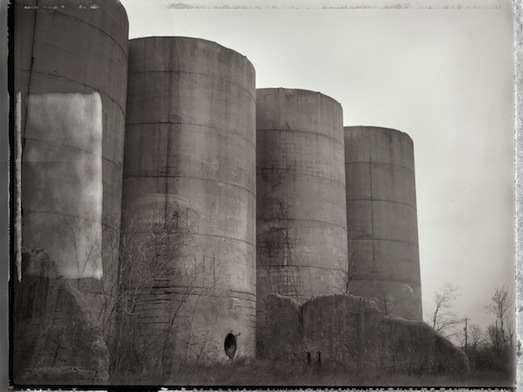
Like many photographers, Galina is attracted to to the implications and aesthetics of abandoned spaces and one of her most recent series, Reclamation, photographed in Houston shows the effects of expansion on the natural world and how the natural world reclaims its lost territory.
Come molti fotografi Galina è attratta dalle implicazioni e dall’estetica degli spazi abbandonati, una delle sue serie più recenti dal titolo Reclamation è stata scattata a Houston e mostra gli effetti dell’espansione dell’uomo sull’ambiente che lo circonda e di come poi la natura stessa riprenda possesso del territorio perduto.
How do you print your pictures?
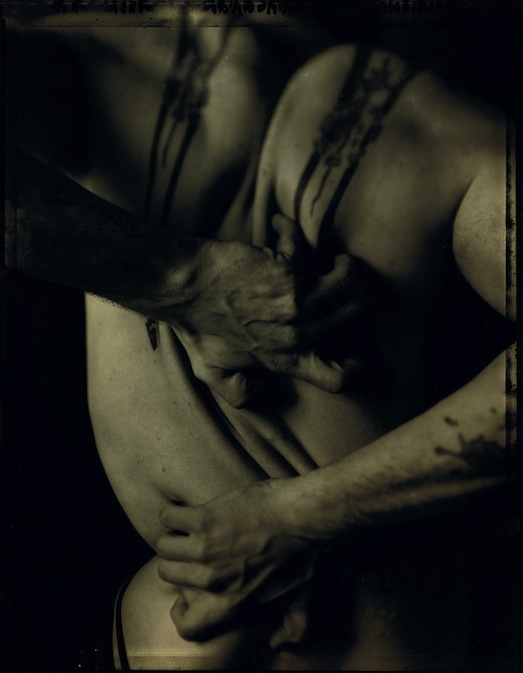
I use two different processes in my work, Polaroid Positive/Negative film and the Wet Collodion Process. Polaroid Positive/Negative is a B&W large format film which has been discontinued since 2008. It is a fragile medium that has a tendency to react to changes in temperature, humidity and other environmental factors. If uncared for, the film will continue to decompose and change. The organic decomposition of the film which can slowly change the image over time attracts me to this medium. The Wet Collodion process in an in-camera process which was invented in the 1850’s, this labor intensive process involves coating a glass plate with collodion then sensitizing it by dipping it into a bath of silver nitrate, while still wet the plate is placed in the camera and exposed. Within a few minutes of exposure the plate must be developed, fixed and dried in order to create the Ambrotype, a positive image on a sheet of glass.
Come sviluppi le tue foto?
Nel mio lavoro uso due diversi metodi, le pellicole Polaroid con negativo e positivo istantaneo e poi lo sviluppo con il collodio umido. La Polaroid è una pellicola in bianco e nero di grande formato, la cui produzione è stata abbandonata nel 2008. È un supporto fragile che tende a reagire ai cambiamenti di temperatura, all’umidità e altri fattori ambientali. Lasciata all’incuria tende a degradarsi. La decomposizione organica della pellicola che può cambiare lentamente l’immagine nel tempo è quello che mi attira di questo supporto. Il processo con il collodio umido è uno sviluppo all’interno della macchina fotografica che fu inventato intorno al 1850; è un metodo laborioso e si ottiene spalmando una lastra di vetro con il collodio per poi attivarla immergendola in un bagno di nitrato d’ argento, infine ancora umida la lastra va inserita nella macchina fotografica ed esposta. Entro pochi minuti dall’esposizione la lastra deve essere sviluppata, fissata e asciugata; si ottiene così un ambrotipo, un’immagine positiva su vetro.
What is going to be your next project?
Currently I am working on a series of portraits using what little Polaroid Positive/Negative film I have left. Rather than clearing the film, I allow the chemistry to decompose it over a period of time ranging from a few hours to years. This allows for unexpected results and happy accidents. The element of chaos and organic decomposition are integral to my photographic practice. In addition to photographing portraits I continue to visit Bastrop, a small town about two hours outside Houston, TX which was badly affected by large scale fires about a year ago. These images are made using a medium format camera and color film. The monochromatic vistas with their subtle color variations initially drew me to photograph this landscape. Upon further reflection, I realize that much of my work deals with what is left behind, be it the visual effects of scars or a charred landscape.
Qual è il tuo prossimo progetto?
Al momento sto lavorando su una serie di ritratti usando quel poco che mi resta di pellicola Polaroid. Invece di pulire la pellicola, la lascio alterare chimicamente per un periodo di tempo che va da poche ore ad anni. Questo permette di avere risultati inattesi e incidenti felici. Casualità e decomposizione organica sono parti fondamentali del mio processo fotografico. In aggiunta ai ritratti, continuo a visitare Bastrop, una cittadina a due ore da Houston in Texas che è stata danneggiata duramente da grandi incendi l’anno scorso. Per questo progetto uso una macchina fotografica di medio formato e pellicola a colori. Inizialmente sono state le viste monocromatiche con le loro sottili variazioni di colore ad attrarmi e convincermi a fotografare questi paesaggi, poi riflettendoci, ho capito che la maggior parte del mio lavoro si occupa di quello che è stato lasciato indietro, siano i segni di una cicatrice o un paesaggio bruciato.
How did you go about preparing the objects for the Specimen series?
Specimen is a series that attempts to add permanence to the temporal nature of personal experience. By bottling the physical traces left behind from significant life events, objects that which would otherwise fade with time are preserved. A removed tooth, lover’s hair, kelp from a trip to the shore, all these mementos spark nostalgia, and are shown in an ultimately futile attempt to preserve them from wear and age. These still-lifes where a challenge to photograph, I used everything from gel, honey, even spit to keep the objects in place.
Come hai preparato gli oggetti per la serie Specimen?
Specimen è una serie che cerca di aggiungere un senso di permanenza alla natuale temporalità di un’esperienza personale. Imbottigliando le tracce fisiche lasciate da eventi significativi, oggetti che altrimenti sarebbero scomparsi col tempo sono invece conservati. Un dente estratto, il capello di un amante, alghe prese un giorno in spiaggia, tutti questi ricordi accendono la nostalgia e sono mostrati in un tentativo, che alla fine è futile, di preservarli dall’invecchiamento e dal logorio. Queste nature morte sono state una sfida da fotografare, ho usato di tutto per tenere gli oggetti in posizione, la colla, del miele, perfino la saliva.
What attracts you to older versions of the printing process?
I learned early on that just making an image was not enough for me, I love to make prints and work in the darkroom. At Pratt I began to manipulate my negatives by freezing them, spiting on them and even setting them on fire just to see what kind of textures I could get and how far I could push the image. This kind of manipulation soon became too heavy handed for me, I wanted to let the chemistry organically change the image and allow a dialogue with my medium. At this time I was lucky enough to meet Jody Ake, who taught me the collodion process and has been my mentor since.
Che cosa ti attrae delle vecchi metodi di stampa?
Ho imparato presto che solamente generare un’immagine non era abbastanza per me. Io amo stampare e lavorare in camera oscura. A Pratt ho incominciato a manipolare i miei negativi congelandoli, bagnandoli con la saliva e dandogli fuoco perfino, solo per vedere che tipo di composizione potevo ottenere e quanto in là potevo spingermi con l’immagine. Questo tipo di manipolazione è presto diventata troppo pesante per me. Volevo piuttosto lasciare che la chimica cambiasse organicamente l’immagine permettendo un dialogo con il mio supporto. In quel momento ebbi la fortuna di incontrare Jody Ake che mi insegnò il processo al collodio e che da allora è stato il mio mentore.
Where did you take the pictures for Sanctuary?
Many of the images are taken while on vacation with family and friends, every time I left on a trip I would bring a only a change of clothes and my 5×7 camera. My family quickly got used to lugging equipment around with me, my dad even enjoyed pointing out potential dead trees for my photographs. (Never quite understanding why some worked, while others I completely over looked).
Dove hai fatto le foto per Sanctuary?
Molte delle immagini sono prodotte nel corso di una vacanza con la mia famiglia e amici, tutte le volte che sono partita per un viaggio mi sono portata solo un cambio di vestiti e la mia macchina 5×7. La mia famiglia si è abituata in fretta a portarsi dietro con me tutta l’attrezzatura, mio padre si divertiva perfino a indicarmi possibili alberi morti per le mie foto, senza che mai capisse proprio il perchè alcuni mi andavano bene, mentre altri li trascuravo completamente.
What was your aim in taking the pictures for the series Sanctuary?
After graduation I wanted to get out and make images in the world. I was so used to working in the studio and was very comfortable doing so. In an attempt to break myself of this habit I traveled as much as I could and looked for subjects in nature which I am naturally drawn to.
Qual è l’intenzione dietro le foto per il servizio Sanctuary?
Dopo la laurea volevo uscire e fare foto in giro per il mondo. Mi ero abituata a lavorare in uno studio e lì mi sentivo a mio agio. In un tentativo di strapparmi da questa abitudine ho girato quanto più ho potuto e ho cercato nella natura soggetti dai quali ero naturalmente attratta.
What prompted you to take the pictures for Remnants?
In my work I continue to return to the theme of what remains. The traces of experience, be they quick and traumatic or slow and over time leave visible evidence on our skin. Our history is written on the body.
Che cosa ti ha ispirato per realizzarei Remnants?
Nel mio lavoro continuo a ritornare al tema di ciò che rimane. Il ricordo di un’esperienza, sia veloce e traumatica o lenta e protratta nel tempo, lasciano un segno visibile sulla nostra pelle. La nostra storia è scritta sul nostro corpo.
What drew you to print on glass? How long does it take to print a picture? The ambrotype images are process intensive, there is a lot of prep that goes into mixing the chemistry, cleaning the glass and setting up the shots. The final image can be seen within ten minutes of exposure.
Cosa ti ha spinto a stampare sul vetro? Quanto ci vuole per stampare un’immagine?
Gli ambrotipi richiedono un lavoro intenso, c’è molta preparazione nel mescolare i prodotti chimici, pulire il vetro e preparare gli scatti. L’immagine finale si può vedere entro dieci minuti dall’esposizione.
Why did you decide to take self portraits?
The self-portrait project came as a direct reaction to my work with scars. I felt that I was asking a lot of my subjects in showing me their most vulnerable physical attributes and I wanted to see how that same process could be applied to making images of myself.
Perchè hai deciso di fare degli autoritratti?
Il progetto degli autoritratti è venuto fuori come diretta reazione al mio lavoro con le cicatrici. Sentivo di chiedere molto ai miei soggetti mostrandomi le loro parti più vulnerabili e volevo verificare come quello stesso processo si potesse applicare per realizzare immagini di me stessa.
Was it difficult for you?
Some of the images are hard to look at now, but at the time they were very therapeutic.
È stato difficile per te?
Alcune delle immagini sono dure da guardare adesso, ma a quel tempo ebbero un effetto terapeutico.
What do you try and show in your self portraits?
Inherent Traits began as a yearlong project during which I set out to photograph myself a hundred times. Slight variations in gesture, expression and posture become significant once the photographs are compiled. This kind of long-term methodical reflection allows subjects and themes, which would otherwise be overlooked to come to the surface. The process of photographing oneself can be physically and emotionally uncomfortable, yet the work allows little room for consideration. This quick pace during the shooting process combined with the inherent steadfast qualities of the collodion process force an honest approach to the often-deceptive practice of self-portraiture.
Che cosa cerchi di mostrare nei tuoi autoritratti?
Inherent Traits cominciò come un progetto di un anno durante il quale mi sono organizzata per fotografarmi cento volte. Leggere variazioni nel gesto, nell’espressione o nella posizione diventano significative una volta che le foto sono messe assieme. Questo tipo di riflessione metodica e a lungo termine permette che temi e soggetti altrimenti trascurati vengano alla luce. Il processo di fotografare sé stessi può essere disturbante fisicamente ma emozionante, tuttavia il lavoro lascia poco spazio per pensarci su. Un ritmo di lavoro così veloce insieme alle caratteristiche proprie dello sviluppo al collodio ti costringono a un approccio onesto alla pratica spesso ingannevole dell’autoritratto.