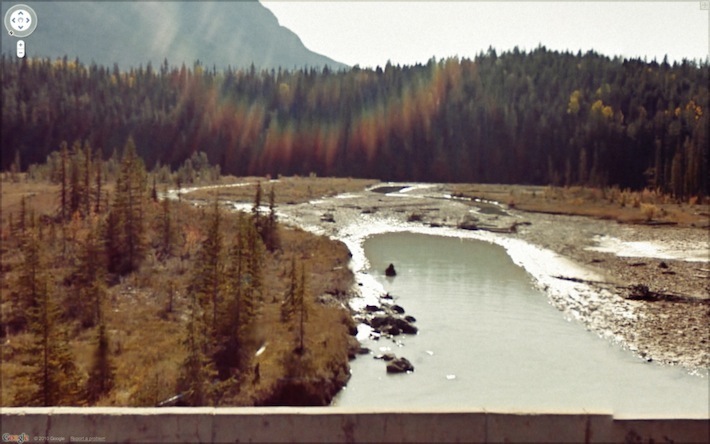
È l’ultimo giorno di lavoro al MACRO, e decido di sfruttare questa mattinata settembrina scambiando due parole con uno degli artisti in residenza temporanea che più mi ha affascinato: Jon Rafman, l’artista canadese che deve il suo successo alla serie di foto 9 eyes google street view. Lavorare in un museo alla fine ha i suoi vantaggi, e così mi ritrovo in uno dei loft del secondo piano, spoglio di qualsiasi arredamento fatta eccezione di un tavolo da lavoro e due sedie. La luce filtra dai finestroni in fondo all’ampia stanza. Non posso fare a meno di scherzare sull’accostamento cinematografico con la tipica scena dell’interrogatorio di un qualsiasi film di spionaggio. Gli dico di stare tranquillo, che non sono della CIA. Ci sediamo.
It is the last workday at Macro Museum, and I decide to capitalize this September morning on the temporary presence of one artist that fascinated me the most: Jon Rafman, the Canadian artist mostly known for his work “9 eyes google street view”. Working in a museum has its benefits, so I end up in one of the 2nd floor lofts, in this vast unadorned room there’s only a big, raw, white table and two seats. The light pierce through the huge windows. I can’t help but joking about this scene resembling every interrogation scene of every spy film ever made. I tell JR to don’t worry, I’m not the CIA. We seat down.
Nel tuo lavoro Codes Of Honor appare chiaro che tu sia un appassionato di videogiochi, o almeno lo eri! Come quest’ultimi hanno influenzato la tua crescita artistica?
Ritengo che, mentre cresciamo, le cose che facciamo e le esperienze che proviamo ci segneranno ed influenzeranno per il resto della vita. Non posso negare il fatto che i videogiochi hanno fatto parte della mia vita, in un certo qual modo sento d’aver creato la storia di un narratore, un personaggio che da un lato ricorda i suoi gloriosi giorni da videogamer professionista, e dall’altro esprime rammarico ed una sensazione di perdita, visto che si trova alla fine della sua carriera. È ancora molto giovane ma la cosa che gli ha portato più piacere nella vita fino a quel momento non è più alla sua portata. C’è questo forte senso di rimpianto perché non può più dedicarsi a quest’attività. In un certo senso è anche una storia che va un po’ sul personale, sul come giustifico tutte le ore passate davanti ai videogame quando ero ragazzino. Ho creato un film che mostra come si possa parlare, da un lato, di argomenti classici come la redenzione, mentori da seguire, la fine di un’era, quando l’eroe si trova alla fine della sua carriera, ma inserendoli in un contesto che è associabile alla cultura popolare: i videogame.
In your work “codes of honor” it looks clear that you’re passionate about video games, or at least you were! How the videogames influenced you in your artistic growth?
I feel like, while you growing up, that the things you do, experience, will influence you for the rest of your life. So I cannot deny the fact that videogames were part of my life growing up, so, in a way, I felt I created a story of a narrator, of a character who is trying to both reminiscing about his glory days as a professional videogame player but who is also at the end of his career, and there’s a sense of regret and loss for this. He’s still very young but the thing that brought him most pleasure in life he cannot truly compete at it anymore. So there’s a sense of regret because he dedicated to something that he can no longer pursuit. In one level I think it is also a personal story for me, on how I justified all the wasted hours spent playing videogames as a kid; so in a way I was trying to show how, to make a film that, on one side, spoke about classical themes, of redemption, and mentorship, and end of eras, when an hero is at the end of his/her careers but really, on the other side, debate it into low culture: videogames.
Giochi ancora qualche volta?
Ho preso una lunga pausa, ma ora il film che tu hai visto al meeting qui al museo (Kool-aid Man In Second Life
n.d.a) usa le riprese del videogioco come materiale per il video. Quindi direi che non riesco a giocare per puro divertimento. No, forse ci riesco, ma lo giustifico in qualche modo.
Do you still play sometimes?
I took a long break, but now the film that you saw (kool-aid man in second life) is using videogame footage as the source material for the film, so now in a way I can’t just play videogames for pure enjoyment, mhh no maybe I am, but I justified it someway.
Una delle cose più importanti al giorno d’oggi è senza dubbio internet. Qual è, secondo te, la connessione tra questo strumento e l’arte?
Come in Codes Of Honor, sono molto interessato ad aspetti della realtà e della cultura, come internet e i videogame, che non sono mai stati veramente usati come materiale artistico fino ad ora, ma che sono comunque molto importanti perché riflettono la cultura dei nostri giorni. Penso che oggi se non ti confronti con internet non puoi veramente capire il mondo. E poi c’è qualcosa di indubbiamente interessante in internet: ovvero l’essere questo contenitore vastissimo al cui interno c’è praticamente tutto; puoi persino pensare che se qualcosa non sia su internet allora non esista.
One of the most important thing, at present days, is without doubt internet. What’s the connection between this tool and art?
Like in “codes of honor”, I’m interested in aspects of reality and culture, like internet and videogames, that haven’t really been material for art up until now, but I think are very important today because they’re reflection of culture; and things that are part of reality and everyday life should be subject of art, so I think you can’t really understand the world today without engaging with the internet. And also there’s something very interesting about, of internet being this incredibly vast network that close together basically everything…you can even think something doesn’t exist unless is on the internet.
È possibile, quindi, essere un internet artist?
Penso che gli artisti di internet esistano già. Tutti gli artisti, che gli piaccia o meno, che l’accettino o no, persino che ne siano consapevoli o meno, sono in qualche modo anche artisti di internet. Devono accettare il modo con cui le immagini sono distribuite attualmente, a meno che essi non siano un club di anziane signore che vivono in una bolla e che usano solo acquarelli. E anche se alcuni artisti non sono presenti su internet, questo fa parte della loro personalità online. Se pensi ad un artista famoso che non ha lavori su internet, magari uno giovane, ti viene da pensare che sicuramente avrà fatto qualcosa al di fuori di internet, ma alla fine ci sarà qualche notizia o qualche immagine online comunque!
Is it possible then, to be an internet artist? I personally believe is possible.
I believe that the internet artists exists already. All artists, whether they like it or not, whether they accept it or not, whether they’re even aware of it or not, are internet artists in one sense because they have to accept the way images are distributed, unless they’re like old ladies living in a bubble within watercolors. And even if they’re not on the internet, it is part of their internet personas. If you see an artist that is famous who doesn’t have works online, especially if they’re young, you’re like “ok this person must be doing something outside the internet” but eventually there will be some news about it, online, anyway!
Penso che tu abbia trovato un buon mix tra l’essere sia online sia in luoghi più propriamente associati all’arte, come musei e gallerie.
Beh per prima cosa devo dire che ci sono cose che lo schermo non può fornire. Ho creato dei posti da esplorare, e su internet ne è pieno, e penso che puoi trovare un feticcio per ogni cosa, ma è pericoloso farlo con gli oggetti. In un certo senso c’è un feticcio per tutti gli oggetti, ma in particolare per gli oggetti fisici, questi respingono tutto il mondo di internet. Allo stesso modo è pericoloso feticizzare internet e il mondo digitale non riconoscendo l’importanza dell’arte che c’è fuori di esso. E se si finisce per feticizzare internet è importante essere consapevoli di quello che si ha davanti: ovvero di un feticcio della realtà.
I think you founded a good mix between being on internet and also in actual art’s places like museums or galleries.
First of all I ‘ve to say that there are some things that the screen cannot provide. I created places to explore, but I think you can fetishize a lot of things but it is dangerous to do it with objects, in a sense they all are, but in particular with physical objects, they dismiss all the digital world of the internet. But it is equally dangerous to totally fetishize just the internet or the digital and not recognize the importance of art, and when you’re doing it, it is important to recognize the fetishization.
Internet è così vasto che ci si può perdere dentro, come stavamo dicendo prima. È questa la ragione che ti ha incoraggiato nelle tue esplorazioni e nei tuoi vagabondaggi per il web?
Diciamo che abbiamo molte più informazioni a disposizione ora rispetto al passato. Quel che succede è una perdita della vera conoscenza delle cose. Quindi, vorrei parlare dell’attenzione: su come si possano avere così tante informazioni alla portata ma, allo stesso tempo, poichè queste informazioni non sono filtrate ma sono come dei dati grezzi, sul modo in cui noi le metabolizziamo. In questo processo si perde qualcosa. Penso quindi che sia dovere di curatori, letterati, critici e artisti di esaminare tutti questi dati grezzi che ci vengono forniti e di metterli all’interno di un contesto e dar loro dei significati. Il problema è che, nel fare quest’operazione, si finisce col perdercisi dentro. Come sono solito dire quando faccio delle presentazioni o lezioni, la sensazione che si ha è paragonabile a quella che potevano avere i dandy quando passeggiavano nelle strade di Parigi nel XIX secolo, quando c’era questa città moderna dove c’erano sempre tantissime cose interessanti, ma allo stesso tempo c’erano mendicanti a un angolo, aristocratici che passeggiavano dall’altra parte della strada, alta borghesia, bassa borghesia, cabaret spettacoli e poster. E allo stesso tempo pensi comunque alla realtà e al fatto che devi fare soldi, oppure al tuo corso di laurea in Filosofia. Ecco Internet è un mash-up di informazioni e di cose che succedono, non è come nel medioevo quando tutto era controllato e amministrato dalla Chiesa. In un certo senso Internet è così, non suddiviso per categorie, come Parigi. L’esperienza della modernità è un mix di cose e soggetti che puoi raggiungere soltanto stando dieci minuti a cliccare davanti al pc.
Internet is so vast, as we were saying before, that you can get lost in it. Is this the reason that encouraged you in your wanderings and explorations?
In a way we have way more information than we ever had before. What happens is that there’s a loss of true knowledge of things. So, in a way, I want to talk about the attention, how you can have so much information but at the same time, because it’s not filtered, because it is all raw data, on one level, about the way we consume it there’s something that is lost. And I think it is up to curators, critics, intellectuals and artists to really try to pass through all those raw data given, and trying to give it context, to give it meaning. The problem is that when you do that, yourself become lost in it, so as I usually describe at the lectures, I feel it is the same sort of experience that the dandy had walking in the streets of Paris in the 19th century, when you had this modern city, with so much going on and at the same time there’s like beggars on one corner, aristocratic walking on the other side of the street, high burgeois, low burgeois, people giving cabaret, posters…and at the same time you’ve to go back and deal with the fact that you’ve to make money, or your studies in philosophy…so it is this mash up of things that are going on, nothing is like in the middle age when everything was connected by the church. In a way the internet is like that, is not radically divided into categories. The experience of modernity is a mash up of things and subjects you can reach by clicking for 10 minutes.
Decisamente rivoluzionario! Ora, avrai sicuramente sentito molte volte giornalisti e persone in generale dirti di quanto siano interessate del tuo lavoro “9eyes”. Ecco io non sono da meno, alla fine è quello il lavoro che mi ha fatto sorgere interesse verso te come artista e verso i tuoi lavori. All’incontro qui al museo, a mio avviso, hai detto una cosa molto interessante riguardo l’utopia di Google di cercare di fotografe il mondo intero in maniera asettica. Siamo poi noi, e tu in questo caso, a dare a quelle immagini senz’anima dei significati travolgenti. Vorrei che mi dicessi qualcosa di più a riguardo.
Bene, è quella tensione di cui stavo parlando tra la macchina da presa, che sta semplicemente prendendo informazioni, e le immagini. Il lavoro della macchina fotografica di Google non è quello di catturare un momento particolare, è programmata come un robot. Se sei a capo di una grossa azienda, o se hai a che fare con statistiche riguardanti gli esseri umani, guarderai verso questi strumenti come mezzi per far aumentare i profitti della tua azienda. Se fai ricerche di marketing o cose simili guarderai alle persone come a degli oggetti, in un certo senso. La macchina di Google riflette questo: tutti sono degli oggetti, la realtà è un oggetto, non c’è anima, è come un mondo senza magia. Ma allo stesso tempo se osserviamo queste immagini vediamo che c’è qualcosa di completamente misterioso in esse. Ed è quella tensione, ed il modo in cui queste immagini sono catturate, che è paradossale, a dare alla foto questa magia.
Definitely revolutionary! Well, I’m sure you’ve heard many times people or journalists telling you that they’re fascinated by your main work, 9 eyes, and so do I. That’s the work that made me interested into you and your works. Here at the meeting, belonging to me, you said something very interesting about google utopy of picturing the entire world in an aseptic way. It is us, and you in this case, to give those images without soul overwhelming meanings. Can you tell us something more about this?
That tension I was talking about between this camera that is basically taking information and the images. The work of the camera is not capturing, it is programmed and done by a robot. If you run a big company or if you’re dealing with statistics of human beings, you looking at things not as individuals but you look at human beings as instruments to make your company making more money. If you’re doing marketing research or such things you look at people as objects in a way. So in a way the google camera reflects that: everybody is an object, reality is an object, there’s no spirit, it is like a world without magic. And then at the same time we look at these images and there’s something completely mysterious about them. And that’s that tension, and the way it is captured, that is a paradox, gives it that magic!
Perché dietro le foto non c’è nessun lavoro di un fotografo professionista, nessuna ricerca di effetti di luce o dell’ inquadratura perfetta, è solo il caso.
Esatto, c’è solo quella tensione tra il significato umano che dà alle immagini significati magici e l’indifferente lavoro robotico, che sembra non distinguere la moralità.
Because there’s not any photographers work behind the pictures, any study of lights effect or of the perfect spot…it is just the case!
Yes, that tension between human meaning that gives images a magic meaning and robotic work that is totally indifferent, that doesn’t seem to spot morality.
Penso che internet sia il contrario di viaggiare, inteso nella sua forma classica. Eppure credo che il termine navigare sia quello che, tra le attività ricreative, ci si avvicina di più. C’è qualcuna, tra le foto che hai raccolto, che ti ha fatto letteralmente viaggiare per andare a vedere il luogo in essa raffigurato?
(ride n.d.a.) Beh solo in maniera indiretta. Sono stato così impegnato a lavorare che ho finito col viaggiare molto spesso, e traendo vantaggio dal successo di questo progetto, mi capita di dover viaggiare in uno dei luoghi che ho utilizzato per Street View casualmente, solo perché devo fare una mostra o per altri motivi di lavoro. Non cerco obbligatoriamente i luoghi che sono raffigurati nelle foto che ho raccolto; ma quando sono nelle città, per esempio qui a Roma, so che ci sono i luoghi raffigurati nelle foto. Quindi vado in cerca di quei luoghi ed è come se li avessi già vissuti. È una sensazione strana, una sorta di déjà vu.
I think internet is the contrary of travelling in his classic form, yet I believe that “surfing the net” is the thing that get closer to travel more than all other recreational activities. Is there any of the picture you have found in your work that actually made you travel to go see that place?
(laughs) only indirectly. I was so busy working that I travelled to some of the places taking advantage by the fact that this project was so successful that I’m now able to travel to some of those places I caught on street view by chance, because I’ve to make an exhibition or something. I wasn’t trying to necessarily go looking for the spots of the pictures, but when I’m in the cities, for example here in Rome, there are some of the places I’ve captured… so I go there and it is like if I’ve already experienced the place without actually having been there. It’s an uncanny felling, It is like a déjà vu!
A me piace quella strana sensazione che noi chiamiamo déjà vu!
È quello che cerco di catturare nei miei lavori. I dejà vu sono persino nei videogiochi. Molte persone mi hanno detto che in alcuni giochi come Grand Theft Auto o altri simili molto coinvolgenti, ci sono delle riproduzioni fedeli di vere parti di alcune città, e quindi l’utente si ritrova a vivere un luogo senza esserci realmente stato, un déjà vu di uno spazio virtuale ancor prima di vederlo nella realtà. Di conseguenza la futura esperienza sarà inevitabilmente mediata da quella virtuale.
I like that weird feeling we call déjà vu.
It is what I try to capture in my work sometimes. There’s this new feeling of déjà vu, even in videogames, many people have told me that they’ve experienced it in videogames like Grand Theft Auto or others that are totally immersive and shows you real parts of cities, and you somehow experience a place without having been there, thus creating a virtual déjà vu where you experience a space virtually before you go there in real life. And your future experience will totally be mediated by the virtual one.
Non so come mi sento riguardo a questo. A volte penso sia un plus, altre volte non sono così convinto perché in un certo qual modo questo tipo di esperienza elimina uno dei piaceri e delle caratteristiche principali del viaggio, ovvero vedere un luogo per la prima volta con i propri occhi.
In realtà quel luogo è stato già mediato da guide e documentari; ormai non c’è nulla di inesplorato, eccetto internet. La differenza è che internet è creato dagli umani e non risponde delle leggi naturali alle quali deve invece rispondere il mondo.
I don’t know how I feel about this. Sometimes I think it’s a plus, some other times I’m not sure about it, because in a way it eliminates one of the pleasure and main feature of travel, that is seeing a place for the first time with your own eyes.
It is already been mediated by the guides or the documentaries; there’s nothing left that is unexplored, except the internet. The difference is that the internet is human created and doesn’t have the laws of nature that the world have.
La tua esplorazione continua infatti nel lavoro Second Life, con il tuo avatar Kool-aid Man. Perché l’hai scelto? E quale tipo di persone pensi passi il proprio tempo su Second Life? La tua sembra quasi una ricerca di sociologia.
Ho scelto Kool-aid Man perché volevo un brand che avesse fatto parte della mia infanzia, e portarlo indietro, renderlo umano, perché noi siamo così forzatamente circondati da brand che finiscono per divenire parte di noi, come Coca-Cola o Disney. Quindi volevo prendere questo brand così riconoscibile in America e renderlo il mio avatar; e poi c’è qualcosa riguardo Kool-aid man che mi ricorda un’espressione da tastiera (emoticon), mi riferisco al suo sorriso ovviamente. È anche interessante vedere come, nonostante si possa essere qualsiasi cosa in Second Life, come questo personaggio si distingua in mezzo agli altri. Un’altra ragione è legata al fatto che di solito questo brand appare in vari luoghi sfondando le pareti.
The wandering continued in “second life” with your avatar Kool-aid man. Why did you choose it? And what kind of people you think spend their time on second life? Yours looks like a sociological research.
I chose Kool-aid man because I wanted to take a brand, that was very much part of my childhood and taking back, making him human, because we’re forcedly surrounded by brands that they become part of us, like coca cola, or Disney. So I wanted to take this recognizable brand in America and make it my own avatar, and there’s also something about the Kool-aid man that reminds me one of the most basic keyboard expression, because of his smile of course. It is also interesting to see how, although you can be everything in second life, this character stands among others. Another reason is because in his brands he breaks through the walls and he show up in places.
Come la sua apparizione in Family Guy!
Si, esatto! E fa esattamente la stessa cosa in Second Life, metaforicamente parlando. Provoca reazioni diverse negli altri utenti, a volte positive a volte negative, e io volevo osservare queste reazioni. Può essere visto come un personaggio troll, e per me il trollare è un aspetto di internet molto importante e quindi volevo vedere come il mio avatar interagiva con gli altri. Ora, riguardo chi ci sia in Second Life, posso dire che non c’è un tipo predefinito di persona. C’è di tutto, dai disabili alle persone che sono lì per fare soldi, quelle che vogliono fare amicizia, persone che vivono in piccoli paesini sperduti e hanno bisogno di relazionarsi. È quasi come una chat room. Ci sono anche persone che avviano il loro business, e spazi per il role playing; è come se fosse Dungeons and Dragons, ma con un ambientazione 3d. Ci sono così tanti tipi diversi di persone che fare un riassunto è veramente difficile. Riflette il mondo reale ma in maniera diversa: l’identità è nascosta e il vero tenore di vita non è discriminante. È come se fosse una versione più libera del mondo reale, dove tutti i desideri repressi trovano posto e si può imparare molto, basti osservare come questi desideri repressi nella vita vera trovano qui un modo per esprimersi.
Like in family guy!
Yes, exactly. And he’s literally doing that in second life as well, or metaphorically doing that. He provokes a certain reaction, sometimes positive sometimes negative and I wanted to see those reaction. He might be seen as a troll character, and for me troll is a very important aspect of the internet and I wanted to see how he could engage people. Now, about who is on second life, there’s no one definite type of person. You have everything from disable people to people that are there to make money or people that want to make community, for example people that are living in small towns somewhere but need to relate. It’s almost like a chat room. There are also people that run their business in it, and it’s also a place to roleplay, it is like dungeons and dragons but with a 3-d environment. There’re so many different types it is tough to summarize. It reflects the real world, but in different way because of the freedom of it, identity is hidden and real economic life doesn’t have so much pressure on second life, it is like a free version of the real world where all the repressed desires we’ve in the real world find place and you can learn a lot if you look at all these repressed desires that find a way to express themselves.
Decisamente un modo interessante di analizzarlo. Ultima domanda, forse un po’ provocatoria. Rispetto alla crisi economica, come pensi che gli artisti debbano comportarsi? Devono osservarla come se stessero guardando attraverso l’asettica macchina fotografica di Google, dando poi un significato alle immagini come hai fatto tu, oppure devono mettersi in prima linea ed avere un approccio più diretto?
Non sono mai stato un sostenitore dell’arte attivista. In realtà penso che la maggior parte delle volte sia una cosa negativa piuttosto che positiva perché le situazioni in realtà spesso sono molto più complicate di quello che appaiono nella propaganda. Un vero aspetto rivoluzionario dell’arte è che esiste una parte capace di filtrare le condizioni sociali, quindi l’arte rivoluzionaria non dovrebbe assomigliare all’attivismo ma a un qualcosa che non è stato mai visto prima. Gli attivisti adoperano modelli attuali di esperienze, e anche scene artistiche; ma in realtà sono ossessionati dall’osservare ed assomigliare ad artisti del passato, perché sono quelli che le persone conoscono e riconoscono, mentre per me la forma è importante per definire la vera essenza di un lavoro artistico; dovrebbe quindi assumere tutte le forme, conformiste e meno tradizionali, così come il realismo dovrebbe essere radicale, drastico. La vera arte radicale in un certo modo esiste al di fuori della percezione di cosa sia l’arte, e l’arte attivista non può farlo.
Definitely an interesting way to analyze it. Last question, maybe a bit provocative. Looking at the economic crisis, what do you think artists should do? They should watch it like if they’re looking through the aseptic Google camera, thus giving meaning like you did, or they should put themselves in the front line to have a more direct approach?
I never advocated activists art. I actually think that is more negative than positive most of the time because the situations are often much more complex than the way it might appear in propaganda. And also what a truly revolutionary aspect of art is that exist a side that screen social conditions, so revolutionary art shouldn’t look like activism but as something that wasn’t seen before. Activists adopt current models of experience and scenes in art and they’re doomed by looking as artists from the past, because that’s what people recognize, and for me form is important to define the true essence of a work of art, so if it has to take all forms, bourgeois form or more traditional ones, like realism it should be radical. Truly radical art in a way exists outside the perception of what art is and activist art can’t really do that.
Se penso ad un artista rivoluzionario ma comunque considerato “attivista”, mi viene in mente Banksy.
Beh si, ma per me è molto difficile riconoscere cosa sia veramente rivoluzionario. Al contrario non sarebbe stato difficile riconoscere a Duchamp un gesto rivoluzionario mettendo un orinatoio all’interno di un museo. Magari alcuni se ne accorsero, non lo so, ma quel gesto secondo me è stato molto più rivoluzionario dell’arte socialista o del realismo perché ha cambiato l’arte; ha messo in discussione tutto ciò che l’arte aveva prodotto fino a quel momento e ha fatto spazio a quello che l’arte avrebbe potuto essere in futuro. Può essere un po’ antisettico ma penso sia molto radicale. È pericoloso aspettarsi che un opera d’arte risolva quel particolare problema della società.
I can think of Banksy as a revolutionary yet activist artist.
Well yes, but for me it is very hard to recognize what is really revolutionary. For example it wouldn’t been hard to realize that Duchamp putting a urinal in a museum, maybe some people did I don’t know, but that was way more revolutionary than socialist- realist art, because that changed what art was. That single gesture it questioned all art made to that point and created space for what art could be in the future. It might be antiseptic but I think is more radical. It’s dangerous to expect that a work would solve that particular problem of the society.
Le immagini tratte da 9 eyes google street view.